Complete · Mantra praise · ~3 min · ~3 min chant
Shiva Panchakshara Stotram
शिवपञ्चाक्षरस्तोत्रम्
Śivapañcākṣarastotram
Five verses on the sacred syllables of Namah Shivaya, each honoring one akshara of the mula mantra.
5 verses · About 3 min · Lord Shiva
How do you want to read?
New here? Read the full text first, or go verse by verse to chant.
Shiva Panchakshara Stotram, also called Panchakshar, is a short hymn on the five syllables of Om Namah Shivaya (Na-Ma-Shi-Va-Ya). It begins Nagendra haraya trilochanaya. Traditionally attributed to Adi Shankaracharya, it is suited to daily recitation. Each verse here includes Sanskrit, English meaning, and an editorial Advaita note.
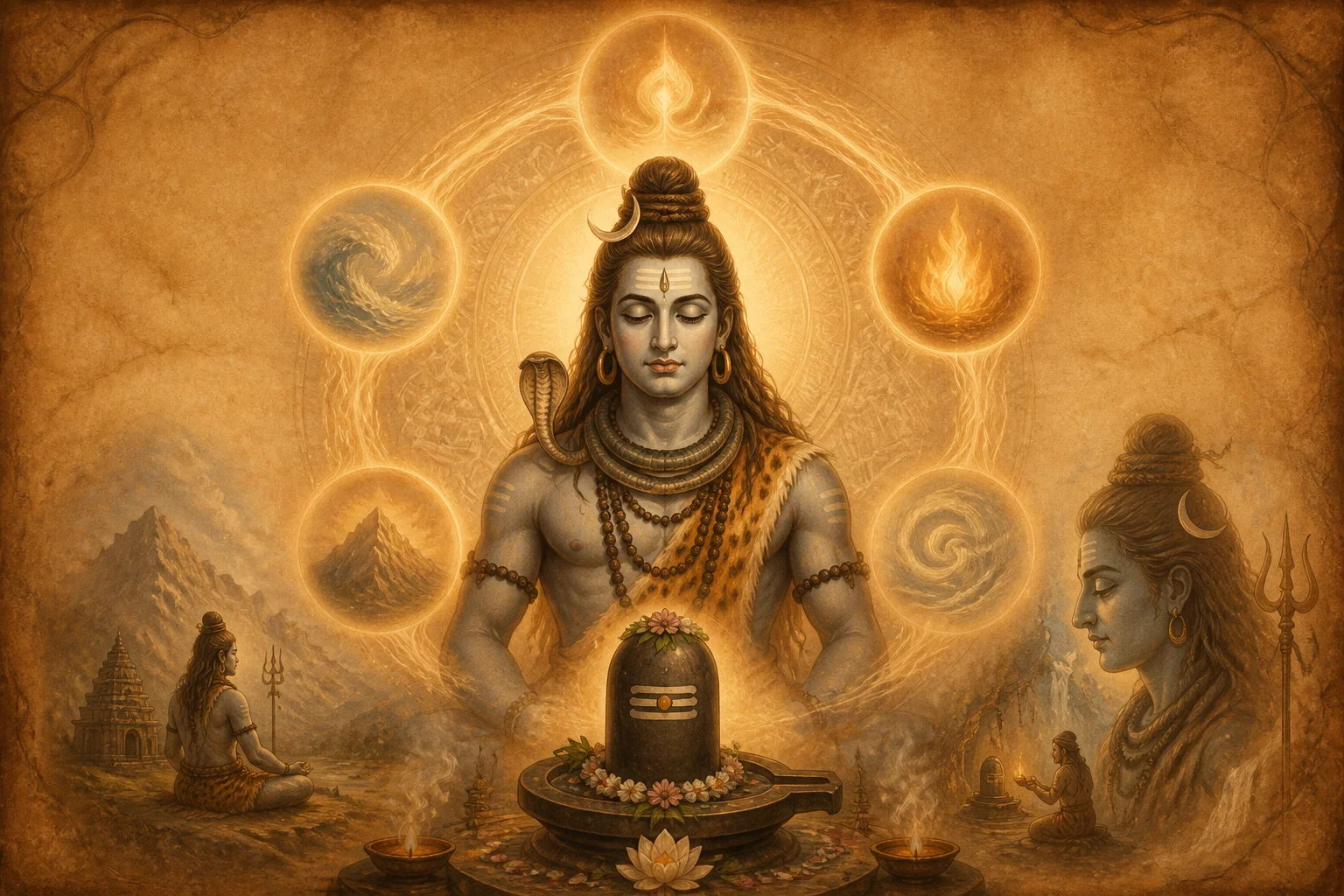
Shiva Panchakshara Stotram expounds the five syllables na-ma-shi-va-ya of the root mantra Namah Shivaya. Shankaracharya praises Shiva through the images associated with each letter: the serpent garland, Ganga anointing, Gauri's lotus face, the three-eyed lord worshipped by sages, and the eternal Yaksha form of Digambara Shiva.
At a glance
- Deity
- Lord Shiva
- Verses
- 5 verses
- Chant time
- About 3 minutes (Mantra praise · ~3 min)
- Attribution
- Traditionally attributed to Adi Shankaracharya
- Sanskrit source
- sanskritdocuments.org · All sources
- Opens with
- Nagendra haraya trilochanaya
- Focus
- Om Namah Shivaya (Na-Ma-Shi-Va-Ya)
- When people chant
- Short daily recitation
- Guide
- Reading guide
Traditional context
Shiva Panchakshara Stotram concentrates the vast Shaiva tradition into five verses on the five syllables Na-Ma-Shi-Va-Ya. It opens with Nagendra haraya trilochanaya and is recited alongside japa of Om Namah Shivaya.
The hymn is suited to daily short practice, Maha Shivaratri, and Pradosham worship.
Structure of this recension
Five verses unfold one syllable each, praising Shiva as lord of serpents, three-eyed one, destroyer of the triple cities, and refuge beyond form.
The compact length makes it easy to memorise while retaining dense theological imagery.
How to read this edition
Devanagari, IAST, and regional transliteration are available. Editorial notes invite Advaita reflection on the Name as pointer to the Self, not mere repetition alone.
Suggested practice
Chant one verse per day with the study note, or all five in sequence before meditation. See the Shiva Panchakshara guide and Shiva stotras collection guide.
Verse overview
- 1
The Na of Namah-Shivaya is the first surrender of the ego before the eternal, pure awareness that wears the universe as ornament. Ash on the body reminds the…
- 2
The Ma-kara flows like the Ganga from the matted locks of the Lord who is the source of all sacred waters. Worship with flowers is the offering of the mind's…
- 3
The Shi-kara is the auspicious power that illumines even the lotus face of Shakti without being dimmed by it. Nilakantha who held poison for the world's sake…
- 4
Moon, sun, and fire as eyes signify that Shiva illumines the three states of waking, dream, and deep sleep. The Va-kara is the expansive consciousness in which…
- 5
The Ya-kara completes the fivefold mantra and returns the mind to the primeval Lord beyond time. Sky-clad Digambara Shiva is Brahman without attributes, the…
All verses
Open full textRelated works
Common questions
- Who composed Shiva Panchakshara Stotram?
- Shiva Panchakshara Stotram is traditionally attributed to Adi Shankaracharya. The site presents a working recension with editorial study notes and does not claim to settle every historical authorship question.
- How many verses are in Shiva Panchakshara Stotram?
- This edition presents 5 verses with Devanagari, IAST transliteration, English meaning, word breakdown, and editorial Advaita study notes.
- Does Shiva Panchakshara Stotram include English meaning?
- Yes. Each verse includes an editorial English meaning and Advaita study note. Sanskrit is in Devanagari, with IAST and Telugu, Tamil, Malayalam, or Kannada transliteration in Reading settings. This edition does not include Hindi meanings.
- Can I read Shiva Panchakshara Stotram in regional scripts?
- Yes. Use Reading settings or the reader toolbar to view the Sanskrit as Devanagari, IAST, Telugu, Tamil, Malayalam, or Kannada transliteration. Those views are script transliterations, not separate language translations.
- What are the first words of Shiva Panchakshara Stotram?
- Verse 1 opens with Nagendra haraya trilochanaya, praising Shiva as the one garlanded with the lord of serpents and as the three-eyed Lord. The five verses then unfold Na-Ma-Shi-Va-Ya.
- Is Panchakshar the same as Shiva Panchakshara Stotram?
- Yes. Panchakshar and Shiv Panchakshar are common spellings for this five-syllable hymn. Use Reading settings for Telugu or other regional script transliteration of the same Sanskrit.