Complete · ~5 min chant
Govindashtakam
गोविन्दाष्टकम्
Govindāṣṭakam
Eight verses to Govinda as supreme bliss, from cosmic Lord to Vrindavan's beloved.
8 verses · About 5 min · Shri Vishnu
How do you want to read?
New here? Read the full text first, or go verse by verse to chant.
Govindashtakam is a celebrated hymn attributed to Sri Adi Shankaracharya. Each verse closes with *praṇamata govindaṃ paramānandam*: bow to Govinda, supreme bliss.
More about this stotra
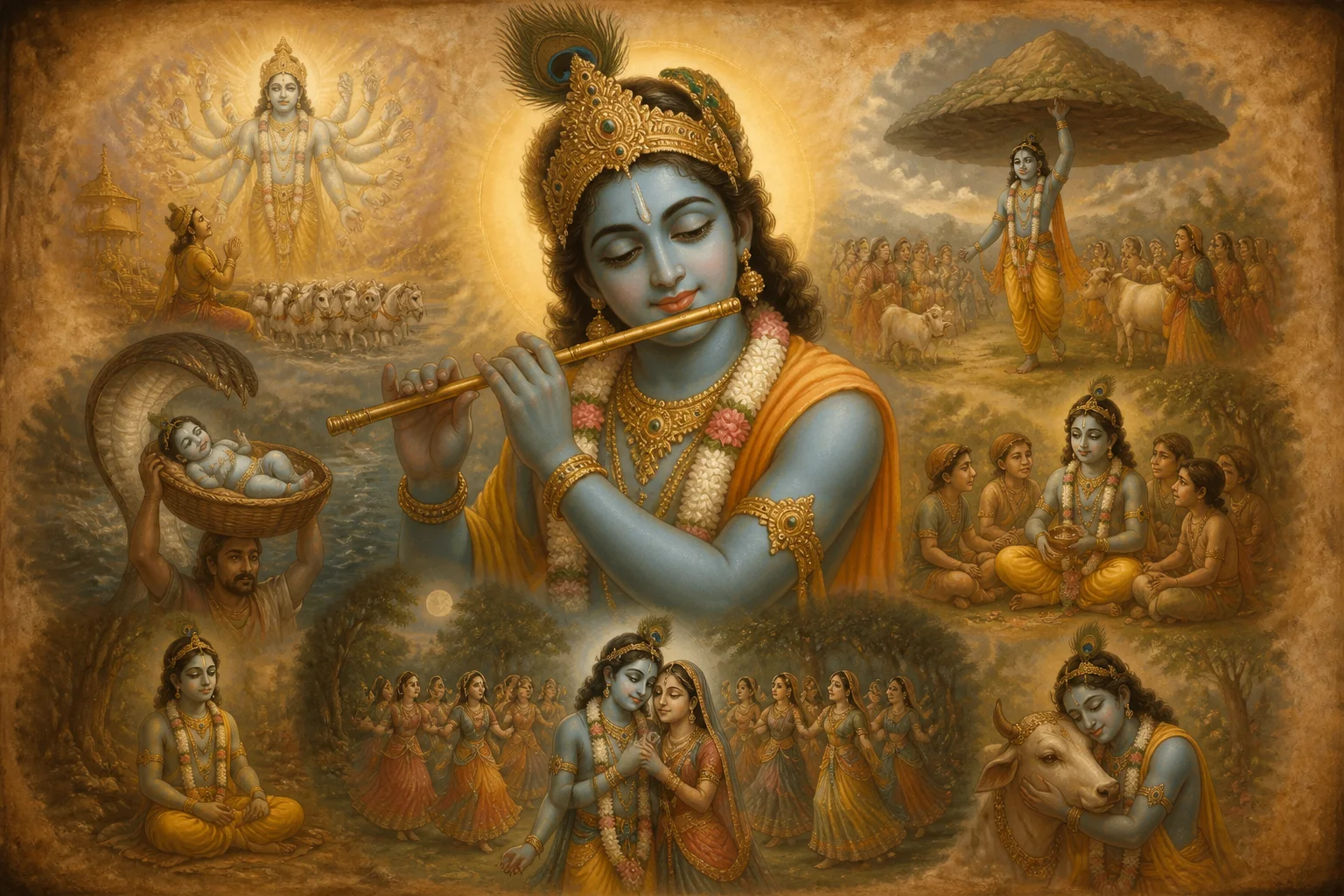
The stotra moves from the philosophical attributes of Govinda as truth and consciousness to His Vrindavan lilas: butter-thief, lifter of Govardhana, dancer on Kaliya, and delight of the gopis. This edition presents the eight main verses without the phala shruti.
At a glance
- Deity
- Shri Vishnu
- Verses
- 8 verses
- Chant time
- About 5 minutes
- Attribution
- Traditionally attributed to Adi Shankaracharya
- Sanskrit source
- sanskritdocuments.org · All sources
- Guide
- Reading guide
Traditional context
Govindashtakam is an eight-verse morning hymn to Govinda, a name of Vishnu. It praises the Lord's feet, compassion, and saving grace with images accessible to daily household devotion.
It pairs naturally with Bhaja Govindam in the Vishnu collection.
Structure of this recension
Eight compact verses gather praise of the Lord who protects devotees, destroys sin, and grants refuge. The ashtakam form makes it suitable for memorisation and quick morning recitation.
How to read this edition
Editorial notes treat each verse as an invitation to turn the mind toward what does not pass. Transliteration settings convert the same Sanskrit into regional scripts.
Suggested practice
Recite before Bhaja Govindam or alone as a short morning opening. Explore the Vishnu stotras guide for related hymns.
Verse overview
- 1
Govinda is named as truth, knowledge, and bliss beyond form yet appearing as all forms. The paradox of the formless wearing form points to Brahman as the one…
- 2
The child who swallowed the fourteen worlds is the consciousness in which all realms arise and subside. What the mother's eyes saw as a frightened boy, the…
- 3
He who eats butter yet sustains the worlds is the Self that feeds on nothing yet nourishes all existence. Removal of the burden of becoming is the recognition…
- 4
The cows name him Govinda, yet he remains beyond word and thought. The Lord who lifts the hill is the inner strength that upholds the devotee when the storms…
- 5
Among the gopis he seems near and far, in difference and non-difference at once, like Brahman appearing as many yet never divided. The joy held through faith…
- 6
The Lord who strips away pretence restores the soul to its own covering of shamelessness before God. He who dispels grief and delusion is the intelligence…
- 7
Dancing on the serpent's head, he is time and beyond time, the cause of all causes. To know him as Lord of the three times is to discover the witness that was…
- 8
The bliss adored in Vrindavan is the same bliss the sages worship in the cave of the heart. Feet that sages salute in the mind lead the seeker from outer grove…
All verses
Open full textRelated works
Common questions
- When do people recite Govindashtakam?
- Many households recite Vishnu stotras in the morning or on ekadashi and other Vaishnava observances. This edition presents 8 verses and takes about 5 minutes to chant.
- What is the opening focus of Govindashtakam?
- Govinda is named as truth, knowledge, and bliss beyond form yet appearing as all forms. The paradox of the formless wearing form points to Brahman as the one reality that is both the ground of maya and untouched by it. Read verse 1 in Study mode for the full editorial note beside the Sanskrit.
- Which hymns pair well with Govindashtakam?
- On this site, related reading includes Krishnashtakam, and Bhaja Govindam. Open those hubs for their own Sanskrit, English meaning, and study notes.