Complete · Short chant · ~4 min · ~4 min chant
Achyutashtakam
अच्युताष्टकम्
Acyutāṣṭakam
Eight name-filled verses to Achyuta and Krishna, beloved for morning recitation.
8 verses · About 4 min · Shri Vishnu
How do you want to read?
New here? Read the full text first, or go verse by verse to chant.
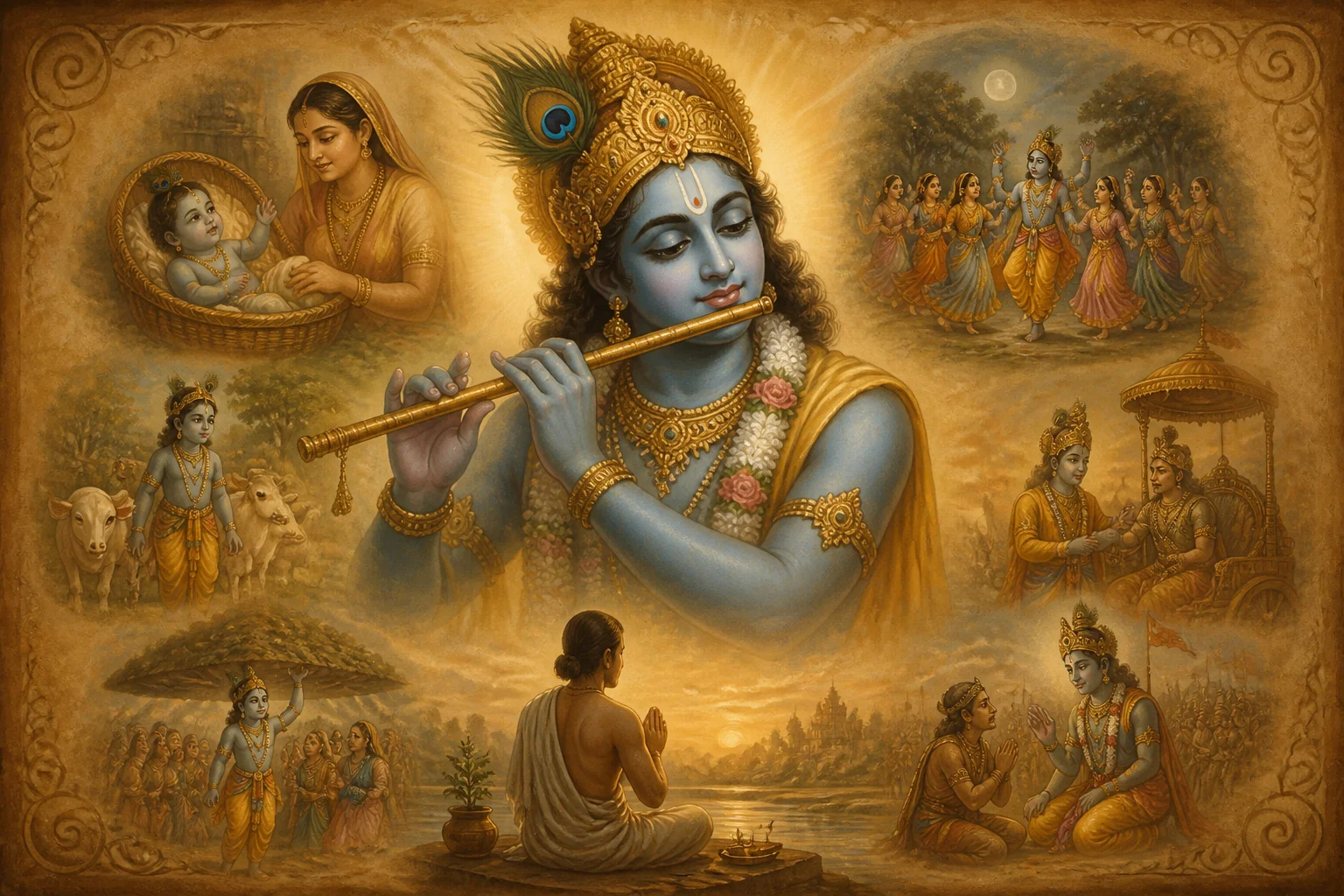
Achyutashtakam is an eight-verse name-filled hymn to Vishnu as Achyuta, traditionally attributed to Adi Shankaracharya. It moves from a litany of names into Rama and Krishna scenes. This reader offers Sanskrit, English meaning, and Advaita study notes.
Achyutashtakam is among the most widely chanted hymns attributed to Sri Adi Shankaracharya. In eight verses the devotee worships the Lord through His many names: Achyuta, Kesava, Rama, Narayana, Krishna, Govinda, and more.
More about this stotra
The hymn moves from gathering the names to scenes from the Ramayana and Krishna's childhood, closing with a portrait of the dark Lord adorned with jewels. This edition presents the eight main verses without the phala shruti.
The hymn is name-practice as much as narrative: Achyuta, Kesava, Rama, and Krishna gather in a single morning cadence before the closing jewelled portrait. It pairs naturally with Govindashtakam when you want two short Vishnu openings. This edition presents the eight main verses without a separate phala shruti.
At a glance
- Deity
- Shri Vishnu
- Verses
- 8 verses
- Chant time
- About 4 minutes (Short chant · ~4 min)
- Attribution
- Traditionally attributed to Adi Shankaracharya
- Sanskrit source
- sanskritdocuments.org · All sources
Traditional context
Achyutashtakam is among the most widely chanted short Vishnu hymns attributed to Shankaracharya. The name Achyuta, the unfallen one, sets the tone for a litany of divine names.
Households often recite it in the morning or before other Vishnu stotras in the same collection.
Structure of this recension
Eight verses move from gathering names - Achyuta, Kesava, Rama, Narayana, Krishna, Govinda - into Ramayana and childhood-Krishna scenes, closing with a jewelled portrait of the dark Lord.
This edition presents the eight main verses without a separate phala shruti.
How to read this edition
Editorial notes treat the name-lists as invitations to fix the mind on what does not fall. Transliteration settings convert the same Sanskrit into regional scripts.
Suggested practice
Chant as a four-minute morning opening, then continue with Govindashtakam or Bhaja Govindam. Use Study mode when you want to linger on a single verse's names and images.
Verse overview
- 1
The many names of the Lord are not many realities but one undivided consciousness appearing through devotion. When the mind gathers them in worship, it turns…
- 2
To fix the mind on the Lord adored by Radha and abiding as Lakshmi's home is to steady attention on the bliss that underlies every form. The one consciousness…
- 3
Salutation to the Self within is salutation to the power that conquers inner foes and stills the restless mind. The flute-bearer is the silent witness whose…
- 4
Each name addressed is a doorway to the same limitless Lord who protects the surrendered soul. In Advaita, calling upon Krishna as protector of Draupadi…
- 5
Rama wandering the forest with Sita is the Self moving through the wilderness of samsara yet never separated from its own purity. Protection is sought not from…
- 6
The child who destroys demons is the awakened consciousness that slays ignorance in its cradle. What appears as a playful cowherd boy is the ever-present Self…
- 7
The Lord whose form flashes like lightning and swells like a raincloud is the luminous awareness that illumines the dark sky of the mind. Worship of lotus eyes…
- 8
The dark Lord adorned with jewels is the inner radiance that needs no outer ornament yet appears clothed in beauty for the devotee's sake. The hymn closes by…
All verses
Open full textRelated works
Common questions
- When do people chant Achyutashtakam?
- It is a favourite morning hymn and a short Vishnu opening before longer works such as Bhaja Govindam or Govindashtakam. Many households recite it whenever they want a compact name-praise of the Lord.
- Does this edition include the phala shruti?
- No. This working text presents the eight main verses without a separate phala shruti. Open the verse list for the complete ashtakam body used on the site.
- How does Achyutashtakam relate to Govindashtakam?
- Both are short Vishnu ashtakams suited to daily recitation. Achyutashtakam gathers many names and narrative glimpses; Govindashtakam centres praise of Govinda. They pair well as morning companions rather than as substitutes for each other.