Complete · Kashi hymn · ~8 min · ~8 min chant
Annapurna Stutih
अन्नपूर्ण स्तुतिः
Annapūrṇa Stutiḥ
Twelve verses to Mother Annapurna of Kashi, blending nourishment, wisdom, and renunciation.
12 verses · About 8 min · Shri Devi
How do you want to read?
New here? Read the full text first, or go verse by verse to chant.
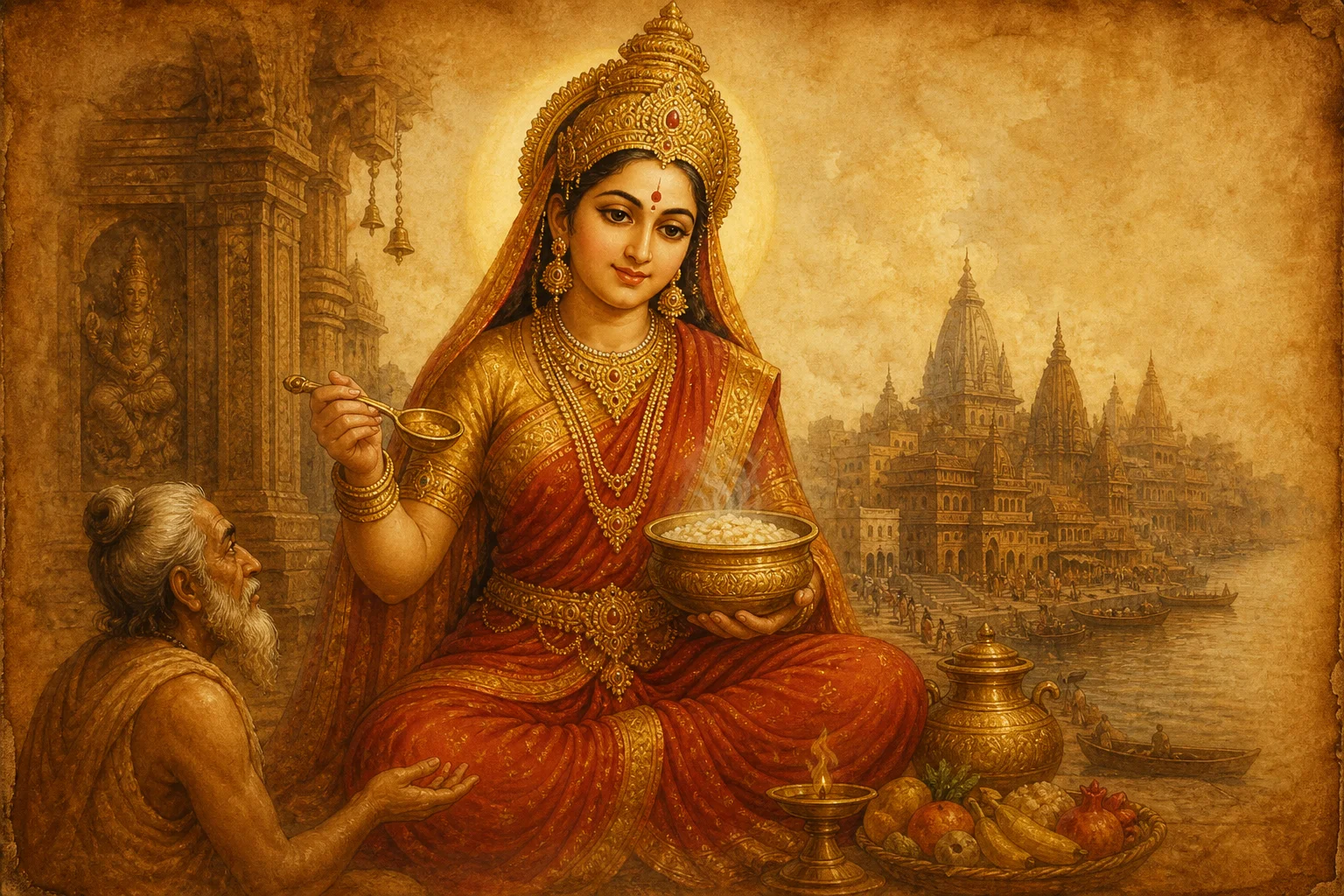
Annapurna Stutih is a twelve-verse hymn to Mother Annapurna of Kashi, traditionally attributed to Adi Shankaracharya. Early verses close with the beggar's plea for alms and grace. This edition presents Sanskrit, English meaning, and editorial Advaita study notes.
Annapurna Stutih is among the most beloved hymns to the Goddess of food and fullness at Kashi, traditionally attributed to Sri Adi Shankaracharya. Each of the first ten verses closes with the beggar's refrain *bhikṣāṃ dehi kṛpāvalambanakarī mātaḥ*: "Mother, give alms and be my refuge of grace." The poem is inseparable from the legend of Shankara's encounter with Annapurna in Varanasi, where he receives the bowl of food that sustains both body and contemplative life.
More about this stotra
The final two verses are widely memorised on their own: the prayer for alms that ripen knowledge and dispassion (*jñāna vairāgya*), and the reimagining of family and homeland in Shiva and the three worlds. In a life-wisdom reading, "food" can include material sustenance, learning, and the inner fullness that makes generosity possible.
At a glance
- Deity
- Shri Devi
- Verses
- 12 verses
- Chant time
- About 8 minutes (Kashi hymn · ~8 min)
- Attribution
- Traditionally attributed to Adi Shankaracharya
- Sanskrit source
- sanskritdocuments.org · All sources
Traditional context
Annapurna Stutih praises the Goddess of food and fullness at Kashi. Tradition links it to Shankaracharya's encounter with Annapurna in Varanasi, where the bowl of food sustains both body and contemplative life.
It remains one of the most beloved Mother hymns associated with the city's generosity and the beggar's dignity before grace.
Structure of this recension
Twelve verses: the first ten close with the beggar's refrain asking Mother for alms and refuge of grace.
The final two are often memorised alone, praying that what is given ripen into knowledge and dispassion, and reimagining kinship across Shiva and the three worlds.
How to read this edition
Editorial notes can read food as material sustenance, learning, and inner fullness that makes generosity possible. These are contemplative reflections, not a traditional bhashya.
Suggested practice
Recite the full hymn when Kashi Mother-devotion is the focus, or memorise the last two verses for daily use. Pair with Kanakadhara Stotram for provision-themed Devi reading, or with Vishwanathashtakam for a Kashi Lord-and-Mother sequence.
Verse overview
- 1
She grants eternal joy, refuge, and purity to the beggar at Kashi's door. In Advaita, the Mother who feeds all bodies is the same consciousness that nourishes…
- 2
Her adornment and fragrance are the splendour of divine beauty, yet the prayer is for alms. Outer magnificence points to the inner fullness that alone…
- 3
She bestows yogic bliss and upholds righteousness while radiating like sun and moon combined. True sovereignty is the fulfillment of the one desire worth…
- 4
Known as Gauri and the Om-bija understood by the Vedas, she opens liberation's door. The alms sought at Kashi are the food of wisdom that opens the gate to…
- 5
She contains the cosmic egg and cuts the strings of life's drama, sprouting the lamp of wisdom. Delighting the Lord of the universe, she is the Shakti in whom…
- 6
Queen of the earth and ever-giving Mother of food, she bestows all joy. The beggar's bowl at her door symbolizes the soul's dependence on the grace that feeds…
- 7
She is Shambhu's threefold Shakti and mistress of the three sacred waters. Fulfilling righteous longing, she uplifts devotees as the power through which the…
- 8
Dakshayani nourishes devotees' wishes and auspicious fortune as Maheshvari. The mother's breast that feeds the world is the symbol of Brahman as the source…
- 9
Her splendour rivals countless suns and moons; she bears the emblems of wisdom and discipline. The rosary and book point to the knowledge she grants along with…
- 10
Ocean of compassion, she protects the righteous and grants liberation directly as Vishveshvari. The alms of Annapurna are ultimately the fearlessness and…
- 11
The famous prayer asks Parvati, ever-full beloved of Shankara, for alms that ripen knowledge and dispassion. True nourishment is not grain alone but the wisdom…
- 12
The closing vision redefines kinship: Mother Parvati, Father Maheshvara, friends as Shiva's devotees, and the three worlds as home. When the divine alone is…
All verses
Open full textRelated works
Common questions
- Is Annapoorna Stuti the same as Annapurna Stutih?
- Yes. Annapoorna and Annapurna are common spellings; Stuti and Stutih both name this praise of the Goddess of food and fullness at Kashi. This hub uses Annapurna Stutih for the twelve-verse working edition.
- What is special about the final two verses?
- The last two verses are widely memorised on their own: the prayer that alms ripen into knowledge and dispassion, and the reimagining of family and homeland in Shiva and the three worlds. Many recite those two even when they do not chant the full twelve.
- How does this hymn relate to Kanakadhara Stotram?
- Both are Devi hymns concerned with dignified provision. Kanakadhara asks Lakshmi's compassionate glance; Annapurna Stutih begs the Kashi Mother for alms that sustain body and contemplative life. They pair as provision-and-fullness companions rather than as duplicates.