Complete · ~5 min chant
Gangashtakam
गङ्गाष्टकम्
Gaṅgāṣṭakam
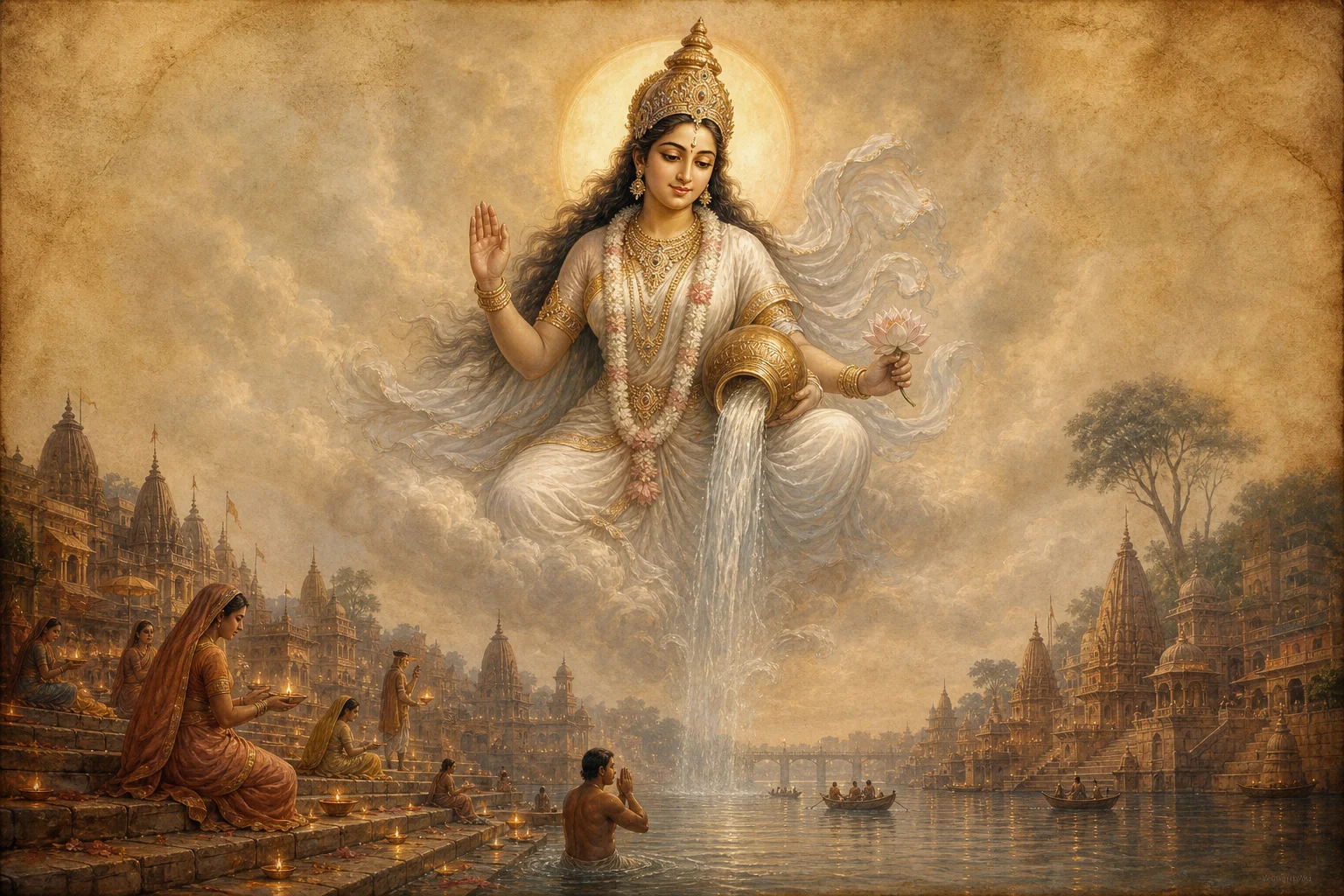
Eight verses to Mother Ganga, stairway to heaven and destroyer of all sin.
8 verses · About 5 min · Sacred Rivers
How do you want to read?
New here? Read the full text first, or go verse by verse to chant.
Gangashtakam is an eight-verse hymn to Mother Ganga, traditionally attributed to Adi Shankaracharya. It praises her descent from Shiva's locks, her power to purify, and her path as stairway to heaven. This reader presents Sanskrit, English meaning, and study notes.
Gangashtakam is a hymn attributed to Sri Adi Shankaracharya in praise of the river Ganga. The devotee prays on her bank, lives on her water alone, and contemplates her descent from Shiva's locks to the earth.
More about this stotra
Each verse closes with a prayer for Ganga's grace. The hymn celebrates her power to purify sin, carry devotees to Vishnu's abode, and serve as the sacred path of the three worlds.
The hymn belongs with Yamunashtakam and Narmadashtakam in the sacred-rivers circle, and it resonates with Kashi stotras wherever Ganga meets the city's edge. Recite it when river devotion, not only Shiva or Devi form-praise, is the day's focus. This edition presents the eight-verse recension with Devanagari, IAST, and editorial notes for contemplative reading.
At a glance
- Deity
- Sacred Rivers
- Verses
- 8 verses
- Chant time
- About 5 minutes
- Attribution
- Traditionally attributed to Adi Shankaracharya
- Sanskrit source
- sanskritdocuments.org · All sources
Traditional context
Gangashtakam praises the river Ganga as mother, purifier, and stairway to heaven. Tradition attributes the hymn to Shankaracharya.
It is recited on riverbanks, during Ganga-centred festivals, and whenever devotees seek the imagery of descent from Shiva's locks to the earth.
Structure of this recension
Eight verses move from the devotee living on Ganga's water alone through cosmic descent, purifying power, and Kashi's edge, closing with prayer for her grace.
Each verse keeps address to the Goddess of the river as living presence, not as abstract landscape.
How to read this edition
Study notes clarify Sanskrit images and invite ethical reflection on purity and grace. They are editorial aids, not a traditional bhashya.
Suggested practice
Chant on Ganga Dussehra or as a short morning river hymn. Continue with Yamunashtakam and Narmadashtakam for a three-river reading sequence, or with Kashi Panchakam when Ganga imagery should turn inward.
Verse overview
- 1
Renunciation at the sacred bank turns outward hunger inward toward the Lord; when craving for objects falls away, worship becomes the natural posture of the…
- 2
A single contact with the purifying current can lift the soul above the age's darkness; what washes the body in sacred water also loosens the mind's clinging…
- 3
From heaven to Shiva's crest to earth and sea, the river's descent mirrors consciousness descending into manifestation yet remaining pure; what purifies the…
- 4
The river that bears the marks of sages, maidens, and beasts shows the one current running through all life; devotion sees the sacred not apart from the…
- 5
The same stream served creator, preserver, and destroyer reveals one reality wearing many offices; the daughter of Bhagiratha is the visible sign that grace…
- 6
She who descends to raise the drowning and sports at the world's edge is the inward current that carries the seeker across the sea of birth; fear of becoming…
- 7
One drop entering the eye opens the abode of Vishnu because vision turned inward meets the supreme; when the body surrenders to the sacred stream, even…
- 8
Called the essence of the three worlds and full Brahman, she bears Hari's foot-dust because the highest and the purifying stream are not two; when sin's weight…
All verses
Open full textRelated works
Common questions
- When do people chant Gangashtakam?
- Devotees recite it on Ganga banks, during Ganga Dussehra, and in household worship of the sacred river. It also suits mornings when the mind needs a purifying, water-centred devotion.
- How does Gangashtakam relate to Yamunashtakam and Narmadashtakam?
- All three are river hymns in this library's sacred-rivers circle. Gangashtakam praises Ganga; the others praise Yamuna and Narmada. Reading them as a set shows shared stotra form turned toward different rivers.
- Is Ganga Ashtakam the same as Gangashtakam?
- Yes. Ganga Ashtakam and Gangashtakam are common spellings of this eight-verse praise. Some printed booklets add extra verses; this edition follows the eight-verse working recension used on the site.