Complete · Mental worship · ~10 min · ~10 min chant
Mrityunjaya Manasika Puja Stotram
मृत्युञ्जयमानसिकपूजास्तोत्रम्
Mṛtyuñjayamānasikapūjāstotram
Sixteen verses of mental worship offered to Mrityunjaya, the conqueror of death, from meditation through offerings.
16 verses · About 10 min · Lord Shiva
How do you want to read?
Chant one verse at a time, or open the full text to scroll the whole hymn.
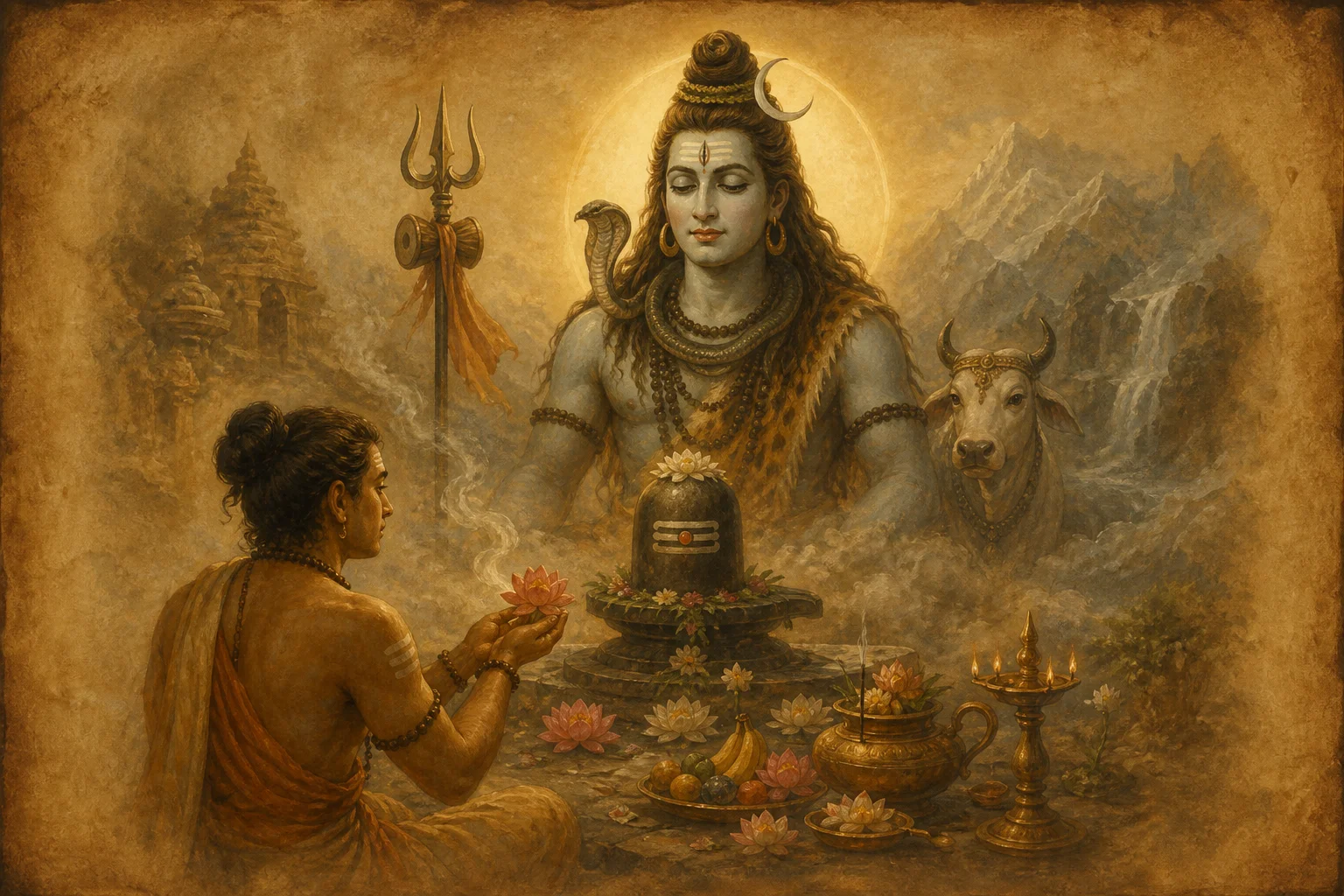
Mrityunjaya Manasika Puja Stotram guides the devotee through an inner puja to Tryambaka, the death-conquering Lord. Sixteen verses move from envisioning the deity on Kailasa through padya, arghya, bath, food, ornaments, and prostration - all offered in the mind's radiant assembly.
At a glance
- Deity
- Lord Shiva
- Verses
- 16 verses
- Chant time
- About 10 minutes (Mental worship · ~10 min)
- Attribution
- Traditionally attributed to Adi Shankaracharya
- Sanskrit source
- sanskritdocuments.org · All sources
Verse overview
- 1
Meditation on the Lord at Kailasa fixes the mind on the deathless Self that appears as the conqueror of death. When the inner image is steady, the fear of…
- 2
The devotee invites the Lord into the heart as one would welcome a guest to worship. Grace sought from Vishveshvara is the recognition that the Self alone…
- 3
The jewelled assembly imagined in the mind is the purified intellect prepared for worship. When the Lord is enthroned there, the restless mind finds the…
- 4
Padya offered in the mind honours the feet of the Lord that are the ground of all movement. In Advaita, the feet stand for the support on which the universe…
- 5
Arghya is the offering of the purified mind back to its source. He who is worshipped by all is the consciousness in which the three worlds appear and dissolve.
- 6
Achamana symbolizes the cleansing of thought before worship. The Self needs no outer purification, yet the ritual trains the mind to return to its innate…
- 7
Madhuparka, the sweet welcoming drink, signifies the joy with which the devotee greets the Lord. The three-eyed one who conquers death is the awareness that…
- 8
The five nectars bathe the five-faced Lord who dissolves the five great sins born of ignorance. When the elements of body and mind are offered in worship,…
- 9
Waters from every tirtha symbolize the gathering of all holy impulses into one act of surrender. The Lord of infinite virtues is bathed when the mind turns…
- 10
Drying the Lord's locks after bath is the gentle care of one who knows the deity as near. The matted hair that holds Ganga is the ascetic mind; drying it is…
- 11
Garments offered to the Lord are the virtues that adorn the inner life. When the mind is dressed in purity and devotion, the formless Self appears clothed in…
- 12
The sacred thread is the thread of mantra and knowledge that links the worshipper to the eternal. He who is reached through devotion alone shows that no ritual…
- 13
Sandal paste on every limb is the pervasion of divine fragrance through the whole being. When worship is mental, the anointing is the steady conviction that…
- 14
Akshata offered with sesame marks auspicious intent without grasping. Worship of Vrishadhvaja is worship of the unmoving witness on which the whole world rides…
- 15
Flowers on the crown are thoughts offered at the seat of wisdom. The lotus-eyed Lord receives the finest blooms of a mind that has turned from worldliness…
- 16
The final act places the Lord's feet in the heart-lotus where the sage dwells in silence. When those feet rest there, the temple is complete: the Self is known…
All verses
Open full textRelated works
Common questions
- When do people recite Mrityunjaya Manasika Puja Stotram?
- Shaiva hymns are often chanted on Pradosham, during Shravan, and on Maha Shivaratri, as well as in short daily practice. This edition is labeled for practice as "Mental worship · ~10 min" and takes about 10 minutes to chant.
- What is the opening focus of Mrityunjaya Manasika Puja Stotram?
- Meditation on the Lord at Kailasa fixes the mind on the deathless Self that appears as the conqueror of death. When the inner image is steady, the fear of mortality loosens its hold on consciousness. Read verse 1 in Study mode for the full editorial note beside the Sanskrit.
- Which hymns pair well with Mrityunjaya Manasika Puja Stotram?
- On this site, related reading includes Shiva Manasa Puja Stotram, and Vedasara Shiva Stotram. Open those hubs for their own Sanskrit, English meaning, and study notes.