Complete · Short chant · ~3 min · ~3 min chant
Vedasara Shiva Stotram
वेदसार शिवस्तोत्रम्
Vedasāra Śivastotram
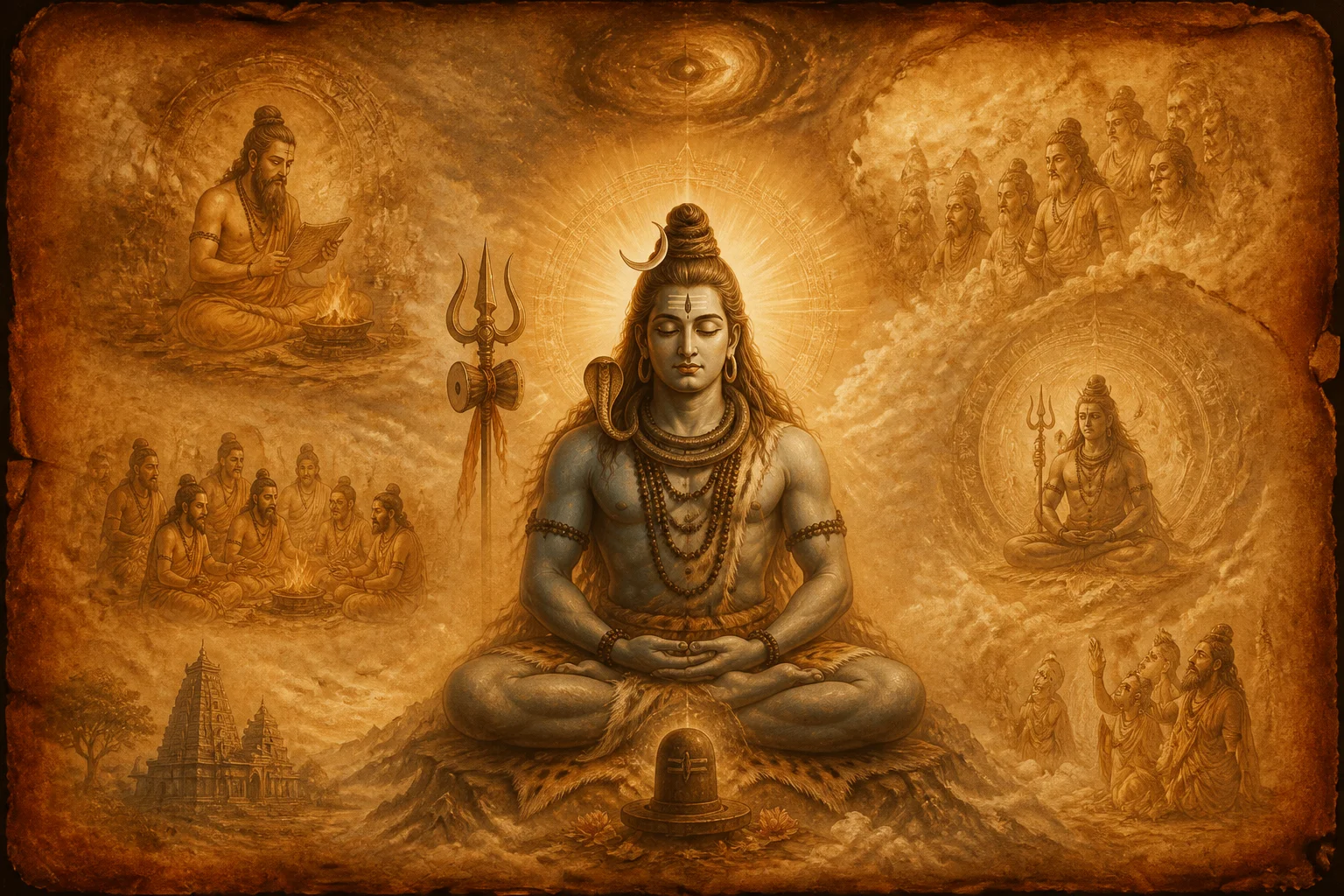
Five verses distilling Vedic teaching into praise of Shiva as supreme Brahman, from Pashupati to the formless Parātman.
5 verses · About 3 min · Lord Shiva
How do you want to read?
New here? Read the full text first, or go verse by verse to chant.
Vedasara Shiva Stotram is a five-verse hymn presenting Shiva as the essence of Vedic knowledge, traditionally attributed to Adi Shankaracharya. It moves from Pashupati's form to the formless Paratman known through Omkara. This reader offers Sanskrit, English meaning, and Advaita notes.
Vedasara Shiva Stotram presents Shiva as the essence (sāra) of Vedic knowledge. In five compact verses attributed to Adi Shankaracharya, the hymn moves from vivid devotional images of Mahadeva to the formless Parātman known through Omkara, in whom the universe arises, is sustained, and dissolves.
More about this stotra
Unlike longer Shiva hymns that linger on narrative ornament, Vedasara keeps the movement tight: from Pashupati and the five faces to the Self known through the syllable Om. It is a useful bridge between daily murti-praise and short Advaita companions such as Nirvana Shatakam. This edition presents the five-verse recension with Devanagari, IAST, and editorial study notes.
At a glance
- Deity
- Lord Shiva
- Verses
- 5 verses
- Chant time
- About 3 minutes (Short chant · ~3 min)
- Attribution
- Traditionally attributed to Adi Shankaracharya
- Sanskrit source
- sanskritdocuments.org · All sources
Traditional context
Vedasara Shiva Stotram presents Shiva as the essence of Vedic knowledge. Tradition attributes the compact hymn to Shankaracharya.
It is suited to readers who want form-praise and Advaita destination in one short sitting rather than a hundred-verse Lahari.
Structure of this recension
Five verses move from Pashupati, Ganga-bearing Mahadeva, and the five-faced Lord toward the formless Paratman known through Omkara, in whom the universe arises, is sustained, and dissolves.
The arc is deliberate: devotion does not stop at ornament; it ripens into essence.
How to read this edition
Editorial notes highlight the journey from murti to essence without claiming to be Shankara's own bhashya. Use Study mode after chanting each verse in Sanskrit.
Suggested practice
Chant all five verses, then sit with the final verse's Omkara language. Pair with Nirvana Shatakam for neti-neti after essence-affirmation, or with Ardhanarishwara Stotram for form before essence.
Verse overview
- 1
Pashupati who destroys sin is the Self that was never bound yet appears to free the bound. Remembering the one Mahadeva turns the mind from the seduction of…
- 2
The five faces encompass the five elements and the five functions of cosmic manifestation, yet the Lord praised is ever-blissful awareness itself. Ash on the…
- 3
Beyond the gunas yet united with Bhavani, Shiva is the unchanging Self and Shakti its creative power, never truly separate. Worship of the five-faced Lord is…
- 4
The prayer for grace acknowledges that the all-pervading Vishvarupa is not grasped by effort alone. When the devotee sees the Lord as the whole universe, the…
- 5
The essence of the Veda culminates here: the formless Self known through Om is origin, sustainer, and final absorption of the cosmos. Worship is the mind's…
All verses
Open full textRelated works
Common questions
- What does Vedasara mean in the title?
- Vedasara means the essence or heart of the Veda. The hymn praises Shiva not only as iconic Mahadeva but as the knowledge toward which Vedic teaching points.
- Is this a long philosophical stotra?
- No. It is only five compact verses, yet it travels from vivid form-praise to the formless Self known through Omkara. That brevity makes it useful as a bridge between daily Shiva chanting and Advaita study.
- Which hymns pair well with Vedasara Shiva Stotram?
- Nirvana Shatakam and Dasha Shloki Stutih sit nearby in theme: short Advaita-leaning Shiva texts. Ardhanarishwara Stotram also pairs well when you want form-based Shiva-Shakti contemplation before essence language.