Complete · Twelve lingas · ~7 min · ~7 min chant
Dwadashalinga Stotram
द्वादशलिङ्गस्तोत्रम्
Dvādaśaliṅgastotram
Twelve verses in praise of the twelve Jyotirlingas, from Somnath to Grishneshwar, attributed to Shankaracharya.
12 verses · About 7 min · Lord Shiva
How do you want to read?
New here? Read the full text first, or go verse by verse to chant.
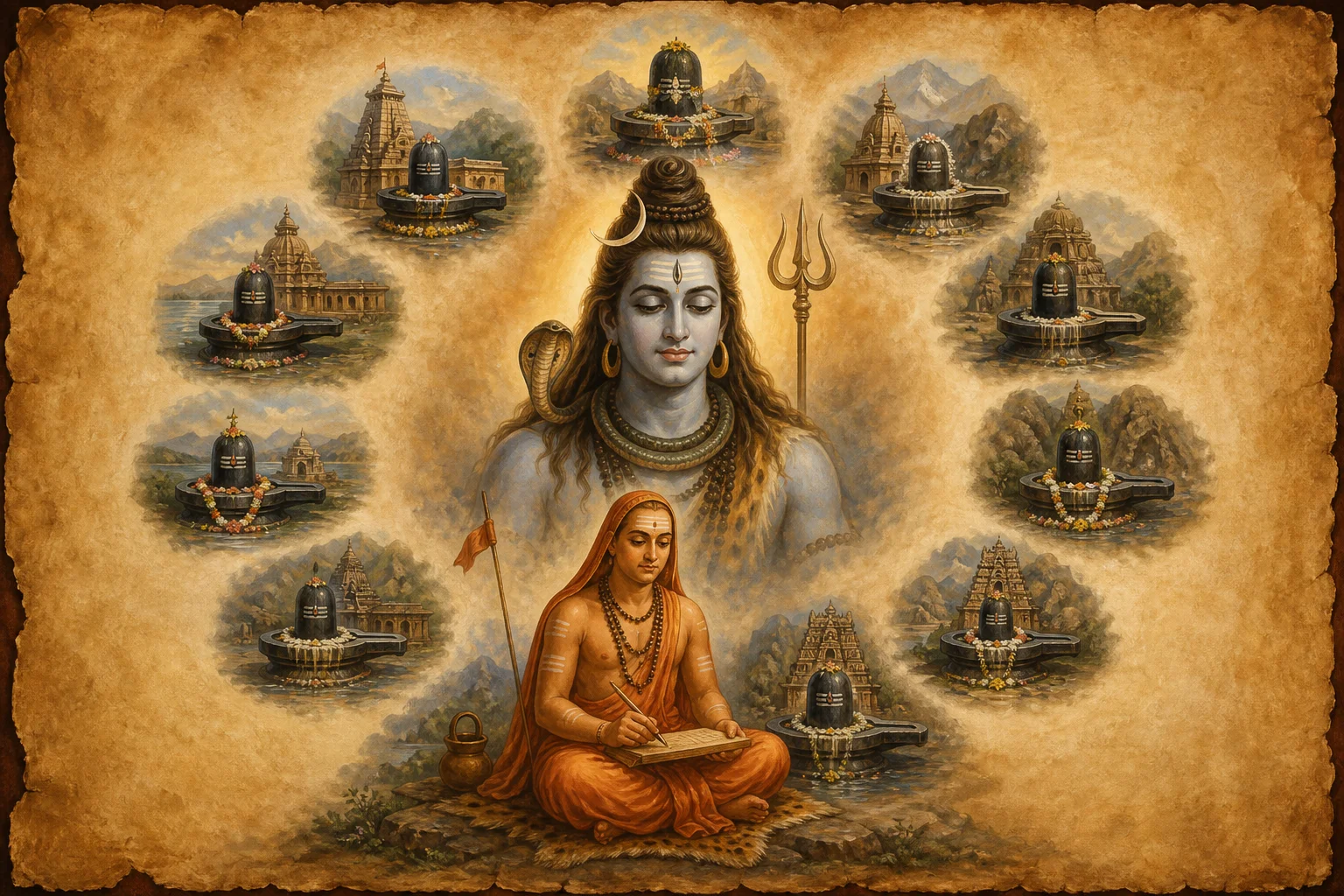
Dwadashalinga Stotram (Dvadashajyotirlinga Stotram) visits the twelve radiant lingas of Shiva across India - Somnath, Mallikarjuna, Mahakaleshwar, Omkareshwar, Vaidyanath, Nageshwar, Kedarnath, Tryambakeshwar, Rameshwaram, Bhimashankar, Vishvanath of Kashi, and Grishneshwar - in twelve compact verses of refuge and praise.
At a glance
- Deity
- Lord Shiva
- Verses
- 12 verses
- Chant time
- About 7 minutes (Twelve lingas · ~7 min)
- Attribution
- Traditionally attributed to Adi Shankaracharya
- Sanskrit source
- sanskritdocuments.org · All sources
Verse overview
- 1
Somnath, moon-crowned Lord of Saurashtra, is sought as refuge. Every jyotirlinga is a doorway to the one light of consciousness that illumines all shrines and…
- 2
Mallikarjuna on Shri Shaila is praised as the bridge over the ocean of becoming. Devotion to the Lord who spans samsara leads the mind to the shore of non-dual…
- 3
Mahakaleshwar of Ujjain grants liberation and wards off untimely death. Time itself is Shiva's power; refuge in him is refuge in the timeless Self beyond birth…
- 4
Omkareshwar at the sacred river confluence is the one Shiva praised as Om. The primordial syllable and the Lord of the linga are one: the sound and silence of…
- 5
Vaidyanath with Parvati is the physician who heals the disease of ignorance. Worshipped by gods and demons alike, he is the one Lord before whom all…
- 6
Nageshwar grants both rightful enjoyment and liberation. The Lord who blesses worldly life also leads the devotee beyond it to the freedom of the Self.
- 7
Kedarnath on the Himalaya is worshipped by sages, gods, and serpents. The Lord on the mountain peak symbolizes the Self reached when the mind ascends beyond…
- 8
Tryambakeshwar by the Godavari destroys sin at a single sight. The third eye of Shiva is the eye of knowledge that burns away the accumulated ignorance of…
- 9
Rameshwaram was worshipped by Rama with bilva leaves across the sea. When the Lord of the universe worships Shiva, it teaches that even the highest avatara…
- 10
Bhimashankar is worshipped even by bhutas and pishachas, yet he benefits devotees. The Lord accepts all worship and leads every soul, however fallen, toward…
- 11
Vishvanath of Varanasi is lord of the universe and refuge of the refugeless. In the city of liberation, the Lord who destroys sin is the inner Self of all who…
- 12
Grishneshwar, abundantly gracious, completes the circuit of twelve lingas. Each shrine reveals the same Shiva; the pilgrimage ends in the recognition that the…
All verses
Open full textRelated works
Common questions
- When do people recite Dwadashalinga Stotram?
- Shaiva hymns are often chanted on Pradosham, during Shravan, and on Maha Shivaratri, as well as in short daily practice. This edition is labeled for practice as "Twelve lingas · ~7 min" and takes about 7 minutes to chant.
- What is the opening focus of Dwadashalinga Stotram?
- Somnath, moon-crowned Lord of Saurashtra, is sought as refuge. Every jyotirlinga is a doorway to the one light of consciousness that illumines all shrines and all hearts. Read verse 1 in Study mode for the full editorial note beside the Sanskrit.
- Which hymns pair well with Dwadashalinga Stotram?
- On this site, related reading includes Vishwanathashtakam, and Manikarnikashtakam. Open those hubs for their own Sanskrit, English meaning, and study notes.