Complete · ~3 min chant
Hanumat Pancharatnam Stotram
हनुमत्पञ्चरत्नम् स्तोत्रम्
Hanumatpañcaratnam Stotram
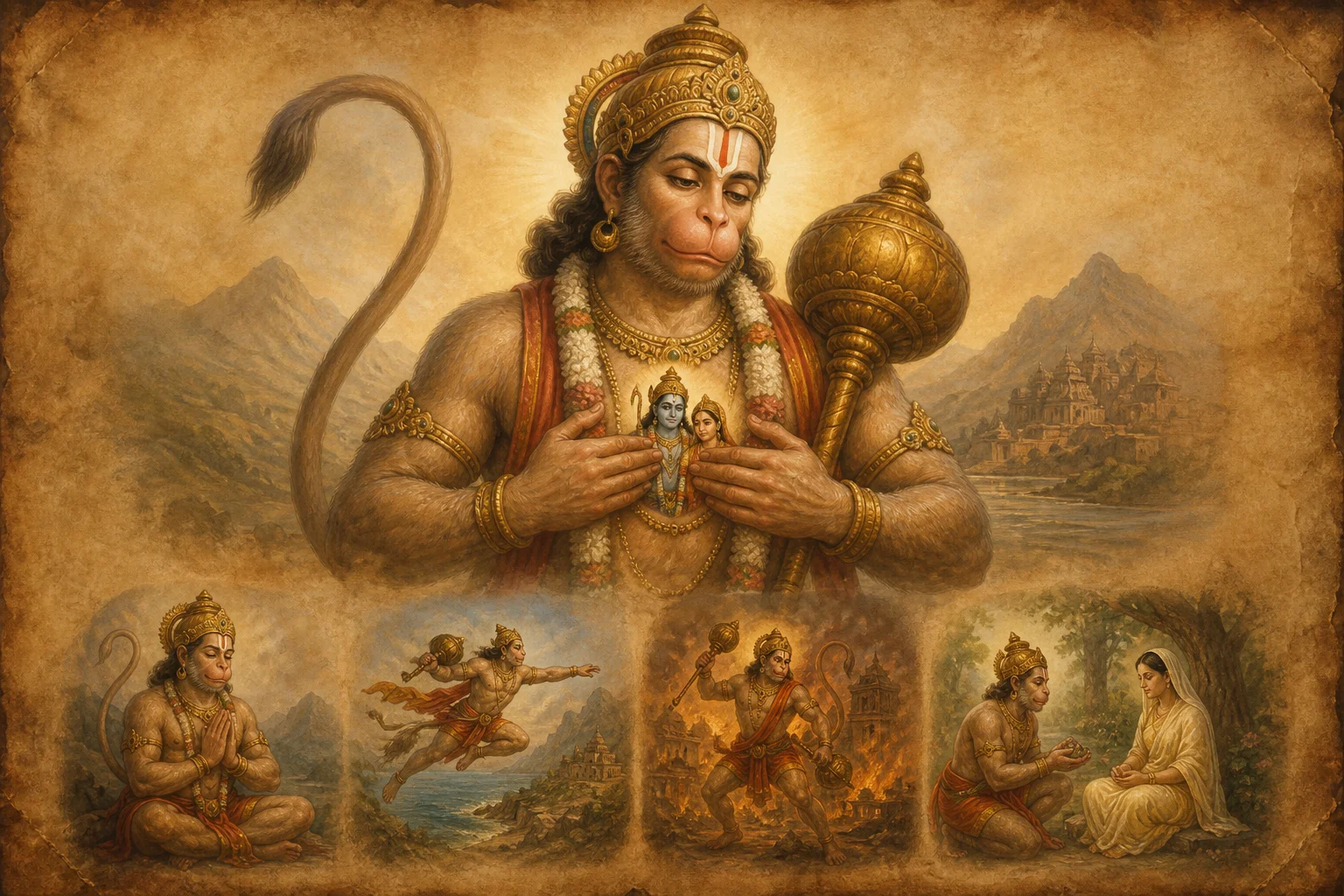
Five jewel-verses to Hanuman, from contemplation in the heart to his form dispelling Sita's sorrow.
5 verses · About 3 min · Lord Hanuman
How do you want to read?
New here? Read the full text first, or go verse by verse to chant.
Hanumat Pancharatnam is a five-verse jewel-hymn to Hanuman, traditionally attributed to Adi Shankaracharya. It contemplates him in the heart as Sita's messenger and restorer of hope. Read Sanskrit, English meaning, and editorial notes verse by verse.
Hanumat Pancharatnam Stotram is a five-verse hymn attributed to Sri Adi Shankaracharya in praise of Hanuman, the son of the wind god. The devotee contemplates him in the heart as Sita's Lord's foremost messenger, free of worldly desire and filled with bliss.
More about this stotra
The verses unfold Hanuman's compassionate form and his deeds: restoring Sita, revealing Rama's glory, and destroying Ravana's pride. This edition presents the five main verses without the phala shruti.
Unlike long Rama bhujanga hymns, these five jewels keep Hanuman close to the heart: messenger, restorer of Sita, shatterer of Ravana's pride. Use them as a prelude to Rama Bhujanga Prayata Stotram or as a self-contained Tuesday hymn. This edition presents the five main verses without a separate phala shruti.
At a glance
- Deity
- Lord Hanuman
- Verses
- 5 verses
- Chant time
- About 3 minutes
- Attribution
- Traditionally attributed to Adi Shankaracharya
- Sanskrit source
- sanskritdocuments.org · All sources
Traditional context
Hanumat Pancharatnam Stotram is a five-verse hymn to Hanuman, son of the wind, attributed to Shankaracharya.
The devotee contemplates him in the heart as Sita's Lord's foremost messenger, free of worldly desire and filled with bliss.
Structure of this recension
Five verses unfold compassionate form and decisive deeds: ending Sita's grief, revealing Rama's glory, and shattering Ravana's pride.
This edition presents the five main verses without a separate phala shruti.
How to read this edition
Study notes are brief editorial reflections on service, courage, and devotion. They are not a traditional commentary lineage or a claim to Shankara's own bhashya.
Suggested practice
Chant before Rama Bhujanga Prayata Stotram or as a short Tuesday or Saturday hymn. Use the heart-contemplation of verse 1 as a one-minute settling practice before longer reading.
Verse overview
- 1
Hanuman in the heart is devotion purified of craving, where rapture arises not from objects but from the Self. The messenger of Rama's Lordship carries the…
- 2
Compassion that fills the eyes is the natural response when the heart recognizes the one Self in all beings. The life-giving grace sought from Hanuman is the…
- 3
Refuge in the noble servant of the Lord is refuge in the ideal of selfless action performed without claim. Wide lotus eyes see the world as the play of the one…
- 4
Ending Sita's sorrow and shattering Ravana's pride symbolize the dissolution of suffering born of separation and the ego's claim to power. When the Lord's…
- 5
He who protects the distressed acts from the certainty that the Lord's power works through the humble instrument. The ripened fruit of tapas is not…
All verses
Open full textRelated works
Common questions
- Is Hanuman Pancharatnam the same as Hanumat Pancharatnam?
- Yes. Hanumat is the Sanskrit stem form often used in stotra titles; Hanuman Pancharatnam is the common spoken name for the same five-jewel hymn.
- Does this edition include a phala shruti?
- No. This working text presents the five main verses without a separate phala shruti. The verses themselves move from heart-contemplation to Hanuman's deeds for Sita and Rama.
- When is this hymn fitting to chant?
- Many recite it on Tuesdays or Saturdays associated with Hanuman worship, before Rama reading, or whenever courage and single-pointed service are the day's theme. It also pairs with Rama Bhujanga Prayata Stotram as a short prelude.