Complete · ~5 min chant
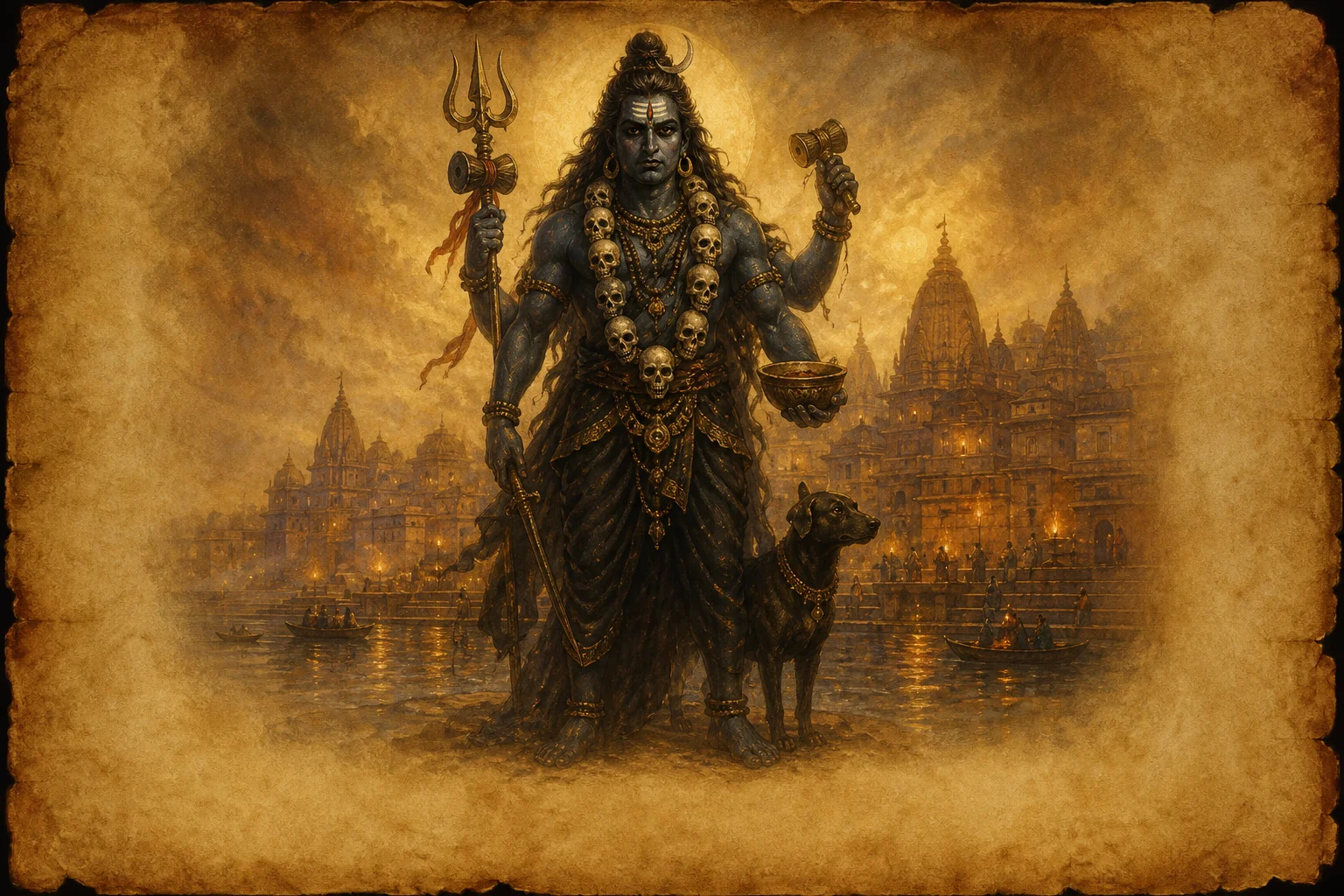
Kalabhairavashtakam
कालभैरवाष्टकम्
Kālabhairavāṣṭakam
Eight verses to Kalabhairava, lord of Kashi, each closing with salutation to the city's sovereign.
8 verses · About 5 min · Lord Bhairava
How do you want to read?
New here? Read the full text first, or go verse by verse to chant.
Kalabhairavashtakam is an eight-verse hymn to Kala Bhairava, traditionally attributed to Adi Shankaracharya. This reader offers Sanskrit, English meaning, and editorial notes.
Kalabhairavashtakam is a celebrated hymn attributed to Sri Adi Shankaracharya in praise of Kalabhairava, the fierce form of Shiva who is lord of Kashi. Each verse closes with *kāśikāpurādhinātha kālabhairavaṃ bhaje*.
More about this stotra
The hymn praises Bhairava as protector of dharma, destroyer of sin, giver of liberation, and master of the cosmic dance. It is widely chanted in Kashi and on Kalabhairava Jayanti.
The hymn is closely associated with Kashi pilgrimage and Kalabhairava Jayanti, where the fierce guardian of time is also remembered as merciful to devotees. Pair it with Vishwanathashtakam when you want Lord and guardian of the city side by side. This edition presents the eight-verse working text with Devanagari, IAST, and study notes.
At a glance
- Deity
- Lord Bhairava
- Verses
- 8 verses
- Chant time
- About 5 minutes
- Attribution
- Traditionally attributed to Adi Shankaracharya
- Sanskrit source
- sanskritdocuments.org · All sources
- Guide
- Reading guide
Traditional context
Kalabhairavashtakam praises Kala Bhairava, the fierce form of Shiva who rules time and guards Kashi. Devotees recite it for protection, especially when facing fear of death or untimely loss.
The hymn is closely associated with Kashi pilgrimage and Kalabhairava Jayanti.
Structure of this recension
Eight verses describe the Lord of Kashi: moon-crested, merciful to devotees, saluted by Narada and yogis, clothed in space. Each closes with refuge at Kalabhairava's feet.
How to read this edition
Philosophy notes read the terrifying and merciful as one reality beyond name and form. Line breakdowns clarify the Sanskrit praise.
Suggested practice
Pair with Vishwanathashtakam and Manikarnikashtakam for a Kashi-themed reading sequence. See the travel and compositions guide.
Verse overview
- 1
When the mind turns to the Lord of Kashi as the ground of all pilgrimage and time, worship affirms that the terrifying and the merciful are one reality beyond…
- 2
The Lord who is bright as countless suns and ferry across the sea of birth is none other than the imperishable Self shining through the three states. To see…
- 3
The weapons in his hands symbolize the powers that cut bondage, yet the dance he loves is the play of consciousness in manifestation. The primal Lord beyond…
- 4
He who grants both worldly enjoyment and final freedom shows that liberation does not require contempt for life. The steady Lord whose form is all worlds…
- 5
The protector of dharma and destroyer of unrighteousness is the inner ruler who cuts the knots of karma. When the mind clings to merit and demerit as absolute,…
- 6
The one without a second, unstained by change, shatters death's arrogance because the Self was never born and cannot die. Devotion to feet radiant with…
- 7
Laughter that breaks the shell of cosmic origination and a glance that burns away sin point to consciousness as the power behind creation and dissolution. The…
- 8
He who purifies both merit and sin for dwellers in the holy city teaches that the Self is not bound by the ledger of deeds. The ancient Lord of the world,…
All verses
Open full textRelated works
Common questions
- When do people recite Kalabhairavashtakam?
- Bhairava hymns are often recited for protection, on Kalabhairava Jayanti, and in Kashi-centred devotion. This edition presents 8 verses and takes about 5 minutes to chant.
- What is the opening focus of Kalabhairavashtakam?
- When the mind turns to the Lord of Kashi as the ground of all pilgrimage and time, worship affirms that the terrifying and the merciful are one reality beyond name and form. Recognition of that Lord within dissolves the fear that makes the world seem other than the Self. Read verse 1 in Study mode for the full editorial note beside the Sanskrit.
- Which hymns pair well with Kalabhairavashtakam?
- On this site, related reading includes Manikarnikashtakam, and Kashi Panchakam. Open those hubs for their own Sanskrit, English meaning, and study notes.