Complete · Sri Vidya hymn · ~5 min · ~5 min chant
Tripura Sundaryashtakam
त्रिपुरसुन्दर्याष्टकम्
Tripurasundaryāṣṭakam
Eight verses to Tripurasundari, opening with the famous four-armed dhyana and closing in Sri Vidya beauty.
8 verses · About 5 min · Shri Devi
How do you want to read?
New here? Read the full text first, or go verse by verse to chant.
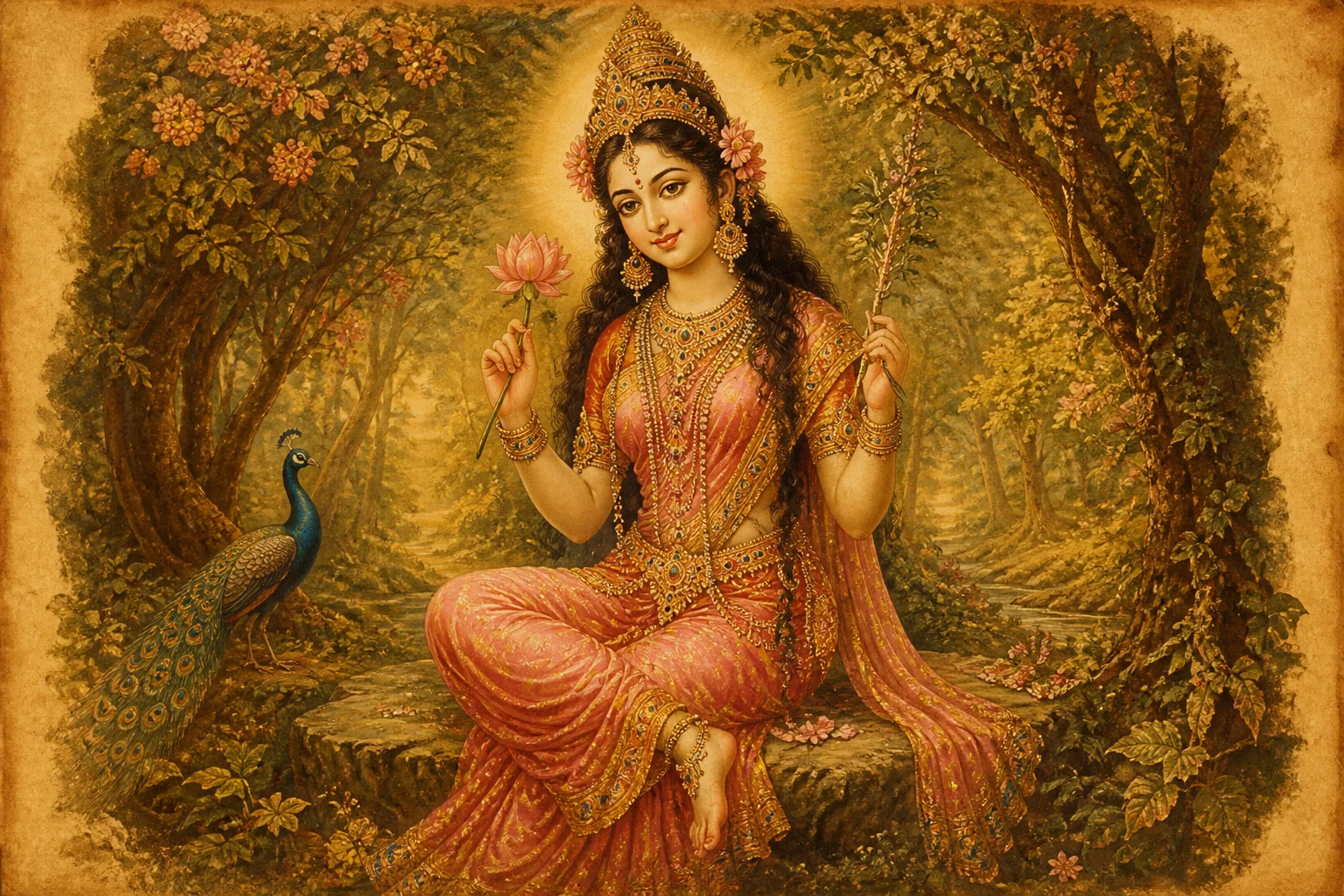
Tripurasundaryashtakam is a beloved eight-verse hymn traditionally attributed to Sri Adi Shankaracharya. Many recensions open with the famous dhyana verse beginning *caturbhuje candrakalāvataṃse*: the four-armed Goddess crowned with the crescent moon, bearing the sugarcane bow, flower-arrows, noose, and goad. The remaining verses, composed in flowing *prithvi* metre, unfold her presence in the kadamba forest, golden seat, and jewelled splendour as consort of the three-eyed Lord.
More about this stotra
The refrain *tripurasundarīm āśraye* ("I take refuge in Tripurasundari") gathers each portrait into a single act of surrender. In Sri Vidya reading, the forest, lotuses, and weapons are not mere ornament: they point to the radiant Shakti in whom creation, preservation, and dissolution are harmonised. The editorial notes below invite contemplative study; they do not replace traditional commentary or initiation into Sri Vidya practice.
At a glance
- Deity
- Shri Devi
- Verses
- 8 verses
- Chant time
- About 5 minutes (Sri Vidya hymn · ~5 min)
- Attribution
- Traditionally attributed to Adi Shankaracharya
- Sanskrit source
- sanskritdocuments.org · All sources
Verse overview
- 1
The opening salutation beholds the Mother in Sri Vidya form with the weapons of inner discipline. She who is the one Mother of the world is the consciousness…
- 2
She dwells in the kadamba grove of the heart, bearing the music of consciousness. Refuge in Tripurasundari is refuge in the beauty that is the Self, consort of…
- 3
The devotee is playfully armoured by her dark splendour and the tide of guru-grace. Protection is not outer defence but the Mother's own being wrapping the…
- 4
She is seated in the golden orb of the six chakras, flashing like lightning. The Sri Chakra image points to the radiant center where Shakti and Shiva are…
- 5
Matanga's daughter enchants even Shiva, the foe of desire, with her glances. The power that subdues the mind's crookedness is the same grace that draws it…
- 6
Memory holds her as the dark beloved in wine-red garments with languid glances. Contemplation of her form turns the intoxicated mind from outer pleasure toward…
- 7
In japa one recalls Ambika adorned with saffron, red garlands, and the weapons of Sri Vidya. Repetition fixes the mind on the form that leads beyond form to…
- 8
The hymn closes by worshipping Bhuvanambika, sovereign of the worlds who adorns even the gods' consorts. She who serves as maid to all is the supreme mistress…
All verses
Open full textRelated works
Common questions
- When do people recite Tripura Sundaryashtakam?
- Devi hymns are widely recited on Fridays, during Navaratri, and as morning Mother-worship. This edition is labeled for practice as "Sri Vidya hymn · ~5 min" and takes about 5 minutes to chant.
- What is the opening focus of Tripura Sundaryashtakam?
- The opening salutation beholds the Mother in Sri Vidya form with the weapons of inner discipline. She who is the one Mother of the world is the consciousness in which the many appear. Read verse 1 in Study mode for the full editorial note beside the Sanskrit.
- Which hymns pair well with Tripura Sundaryashtakam?
- On this site, related reading includes Soundarya Lahari, Lalita Pancharatnam Stotram, and Kalyana Vrishti Stavah. Open those hubs for their own Sanskrit, English meaning, and study notes.