Complete · Dawn meditation · ~4 min · ~4 min chant
Lalita Pancharatnam Stotram
ललिता पञ्चरत्नम् स्तोत्रम्
Lalitā Pañcaratnam Stotram
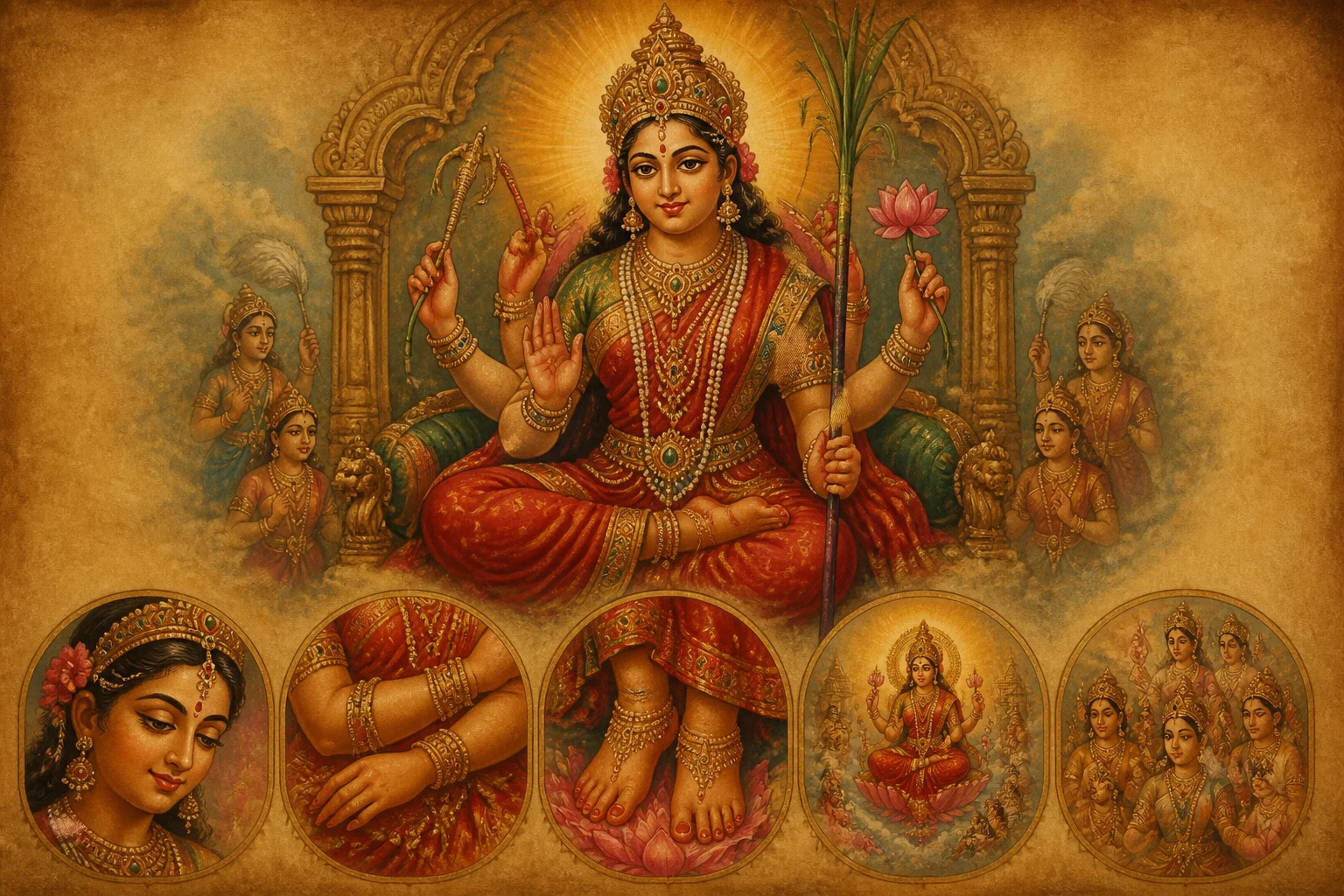
Five dawn verses on Lalita Tripurasundari's face, arms, feet, glory, and holy names.
5 verses · About 4 min · Shri Devi
How do you want to read?
New here? Read the full text first, or go verse by verse to chant.
Lalita Pancharatnam is a five-verse dawn hymn to Lalita Tripurasundari, traditionally attributed to Adi Shankaracharya. Each verse begins at morning remembrance and gathers a miniature upasana. Read Sanskrit, English meaning, and editorial study notes here.
Lalita Pancharatnam Stotram, the "five jewels" of praise, is a concise morning hymn to Lalita Tripurasundari traditionally attributed to Sri Adi Shankaracharya. Each verse begins at dawn (*prātaḥ*) and moves through a complete miniature upasana: remembering her face, worshipping her arms, bowing to her feet, praising her cosmic sovereignty, and reciting her blessed names.
More about this stotra
The hymn belongs to Shankara's Sri Vidya devotional corpus alongside Soundarya Lahari and related works. Its structure makes it accessible for daily recitation before deeper sadhana. The names in the final verse gather many aspects of the Goddess into one utterance, inviting the devotee to see beauty, power, motherhood, and transcendent speech as one reality.
At a glance
- Deity
- Shri Devi
- Verses
- 5 verses
- Chant time
- About 4 minutes (Dawn meditation · ~4 min)
- Attribution
- Traditionally attributed to Adi Shankaracharya
- Sanskrit source
- sanskritdocuments.org · All sources
- Guide
- Reading guide
Traditional context
Lalita Pancharatnam Stotram, the five jewels of praise, is a concise morning hymn to Lalita Tripurasundari attributed to Shankaracharya.
It sits in the Sri Vidya circle of devotion alongside Soundarya Lahari and Tripura Sundaryashtakam, offering a short doorway into that larger corpus.
Structure of this recension
Five verses begin at dawn and move through a miniature upasana: remembering her face, worshipping her arms, bowing to her feet, praising her cosmic sovereignty, and gathering her blessed names.
The compact form makes daily memorisation realistic without sacrificing theological density.
How to read this edition
Study notes are brief editorial reflections suited to morning contemplation. They are not a traditional bhashya or a manual of formal tantric practice.
Suggested practice
Recite at dawn before longer Devi reading. Follow with Tripura Sundaryashtakam or a few verses of Soundarya Lahari when you want to deepen the same current of Mother-worship.
Verse overview
- 1
Morning remembrance of the Goddess turns the mind from sleep's darkness toward the luminous face of consciousness itself. The beauty described is not mere…
- 2
The arms that grant every wish symbolize Shakti, the active power through which the formless Self manifests. Worship of her hands is worship of the creative…
- 3
The lotus feet that ferry one across samsara are the ground of being itself, untouched by the waves of birth and death. To bow at dawn is to anchor awareness…
- 4
She who is cause of creation yet beyond speech and thought is Maya-Shakti and also the supreme Brahman as the power of consciousness. Praise at dawn affirms…
- 5
Each sacred name is a doorway into the one reality that speech cannot finally capture. Uttering them at dawn purifies the mind so that names and the named…
All verses
Open full textRelated works
Common questions
- Why is this called a dawn hymn?
- Each verse begins with morning remembrance (pratah) and moves through a compact sequence of contemplating the Goddess's face, arms, feet, sovereignty, and names. Many recite it at the start of the day before longer Sri Vidya reading.
- How does it relate to Soundarya Lahari?
- Both belong to Shankara's Sri Vidya devotional circle. Lalita Pancharatnam is a short daily jewel-hymn; Soundarya Lahari is a hundred-verse long-term companion. Beginners often start with the pancharatnam before attempting sustained Lahari practice.
- Is Lalita Pancharatnam the same as Tripura Sundaryashtakam?
- No. Tripura Sundaryashtakam is a separate eight-verse hymn on this site. Lalita Pancharatnam is the five-jewel dawn text. Open each hub for its own verses and notes.