Complete · ~4 min chant
Guru Paduka Stotram
गुरु पादुक स्तोत्रम्
Guru Pāduka Stotram
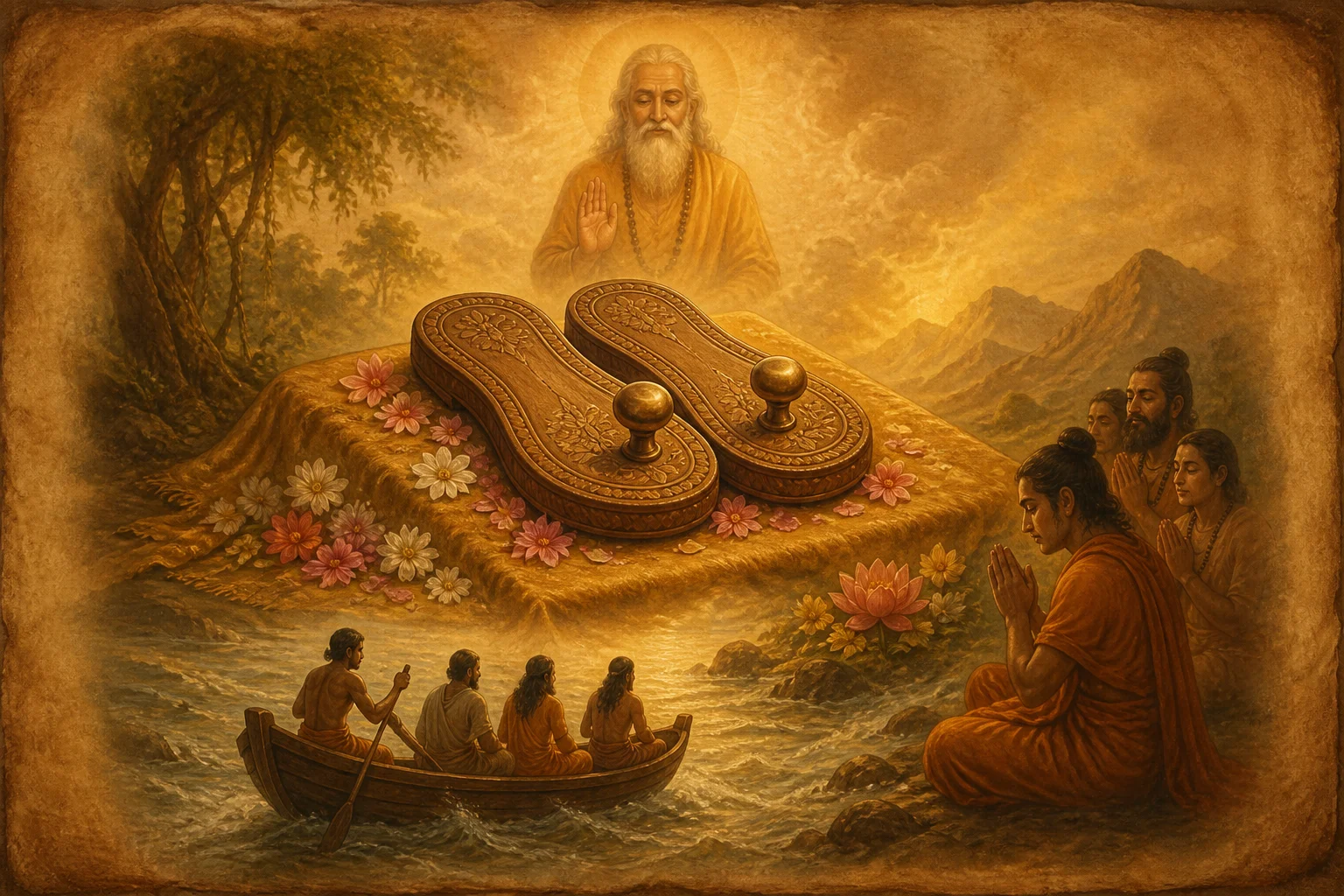
Nine verses in praise of the Guru's sandals, boat across samsara and giver of liberation.
9 verses · About 4 min · Guru and Dakshinamurti
How do you want to read?
New here? Read the full text first, or go verse by verse to chant.
Guru Paduka Stotram praises the teacher's sandals as the path itself. Traditionally attributed to Adi Shankaracharya, this edition presents Sanskrit lyrics, English meaning, and study notes.
Guru Paduka Stotram is a luminous nine-verse hymn traditionally attributed to Sri Adi Shankaracharya. It adores the padukas, the sandals of the Guru, as the visible sign of the feet that carry grace. Each verse ends with the refrain namo namah shri guru padukabhyam.
More about this stotra
The poem speaks in cascading images: the sandals as a boat across the endless ocean of samsara, as moon and rain cloud, as sun and Garuda, as givers of discrimination, dispassion, awakening, and swift moksha. Tradition links its composition to the young Shankara beholding the padukas of Govinda Bhagavatpada on the Narmada.
This edition presents the standard nine verses used in Advaita guru-bhakti. It is especially chanted on Guru Purnima and Thursdays. The focus notes are editorial study aids, not a substitute for traditional commentary.
At a glance
- Verses
- 9 verses
- Chant time
- About 4 minutes
- Attribution
- Traditionally attributed to Adi Shankaracharya
- Theme
- Devotion to the guru's paduka
Verse overview
- 1
The Guru's sandals as boat across samsara are the teaching that carries the disciple when self-effort alone cannot swim the sea. Devotion and dispassion…
- 2
Poetry and fortune are secondary gifts; the deeper boon is release from the burning sense of personal disaster. The sandals that cool misfortune's fire point…
- 3
Bow to the Guru's feet and even the destitute and mute may find wealth and speech, for the true wealth is knowledge of the Self. Outer gifts mirror the inner…
- 4
Lotus feet that remove delusion fulfil true desire by showing what is worth wanting. The disciple who bows learns that the highest gift is freedom from…
- 5
Kingship conferred by the sandals is the sovereignty of the Self over the mind, greater than any earthly throne. Radiance borrowed from every crown points to…
- 6
Sin's darkness, the three afflictions, and spiritual sloth are obstacles to knowing the Self; the Guru's feet act as sun, Garuda, and fire. Each image names a…
- 7
The sixfold discipline and samadhi flow from the Guru who steadies devotion to the Lord. In Advaita, steady bhakti at Vishnu's feet and the ripeness for…
- 8
Worship that purifies the heart fulfils every true desire by aligning the seeker with the Self. The Guru who upholds the sacred offering teaches that outer…
- 9
Desire's serpents are overcome by the Garuda of the Guru's grace, which grants discrimination, knowledge, and moksha. The final verse gathers the hymn's aim:…
All verses
Open full textRelated works
Common questions
- When do people recite Guru Paduka Stotram?
- Guru hymns are commonly recited on Guru Purnima, Thursdays, and during remembrance of the teacher. This edition presents 9 verses and takes about 4 minutes to chant.
- What is the opening focus of Guru Paduka Stotram?
- The Guru's sandals as boat across samsara are the teaching that carries the disciple when self-effort alone cannot swim the sea. Devotion and dispassion received at the feet of the teacher unite in the one path to the Self. Read verse 1 in Study mode for the full editorial note beside the Sanskrit.
- Which hymns pair well with Guru Paduka Stotram?
- On this site, related reading includes Gurvashtakam, and Dakshinamurti Ashtakam. Open those hubs for their own Sanskrit, English meaning, and study notes.