Complete · Mental worship · ~12 min · ~12 min chant
Tripura Sundari Manasa Puja Stotram
त्रिपुरसुन्दरी मानस पूजा स्तोत्रम्
Tripurasundarī Mānasa Pūjā Stotram
Sixteen verses of mental worship to Tripurasundari, building her jewelled realm in the heart.
16 verses · About 12 min · Shri Devi
How do you want to read?
Chant one verse at a time, or open the full text to scroll the whole hymn.
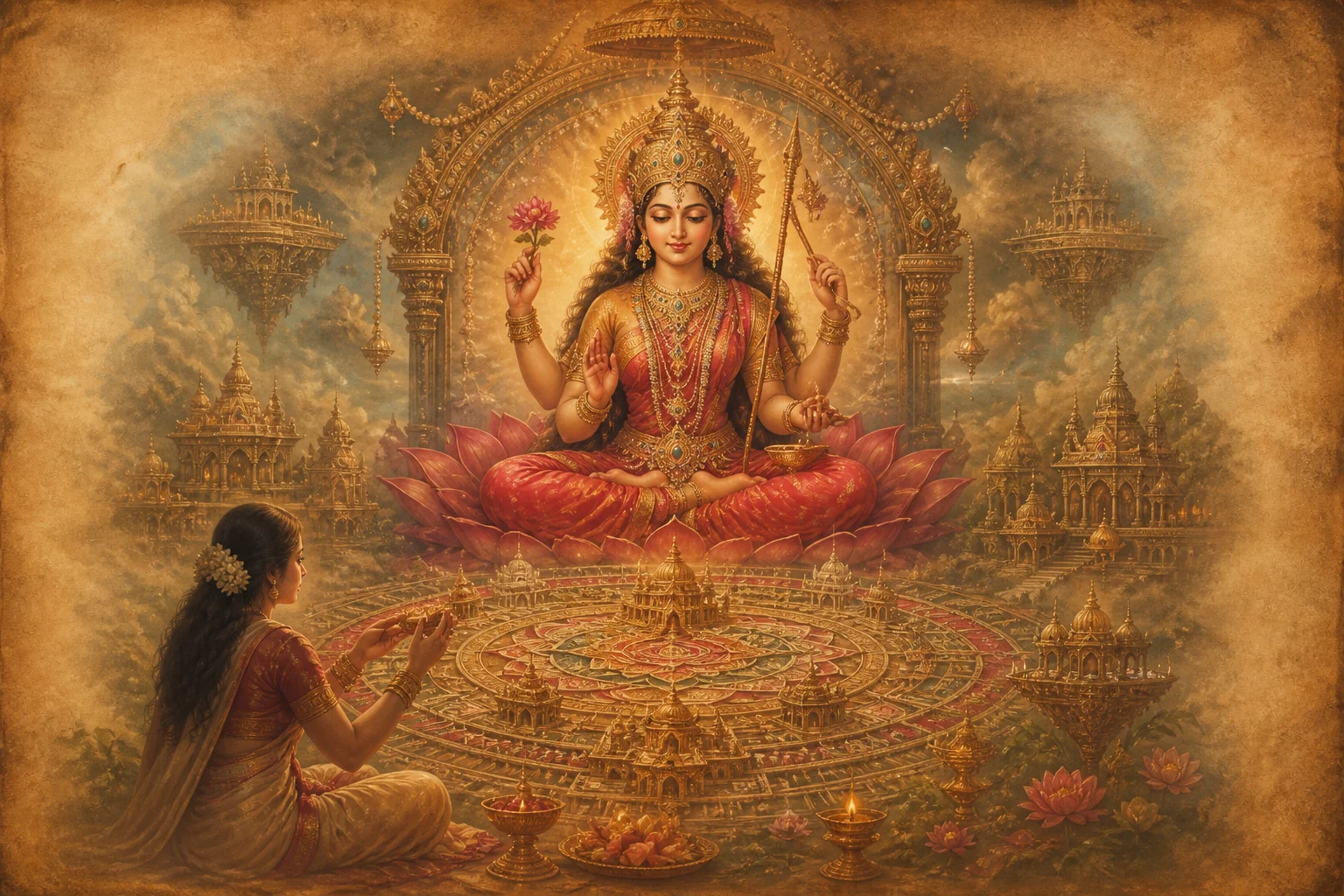
Tripura Sundari Manasa Puja Stotram is a celebrated hymn of interior worship traditionally attributed to Sri Adi Shankaracharya. Where ordinary puja requires flowers, lamps, and offerings, this stotra constructs the entire sacred geography of Sri Vidya within consciousness: Jambudvipa, Nandana grove, golden walls, jewelled pavilions, and the gathering of gods awaiting the Goddess.
More about this stotra
The opening verse confesses humble limits of devotion, then offers worship through "flowers of beautiful words." Later verses place directional guardians, Kama, Rati, and Vasanta at the doorway of the heart's lotus. Longer recensions extend through bathing, adornment, and arati; this edition presents the sixteen-verse core used in many daily practices. The notes invite contemplative study rather than replacing traditional Sri Vidya initiation.
At a glance
- Deity
- Shri Devi
- Verses
- 16 verses
- Chant time
- About 12 minutes (Mental worship · ~12 min)
- Attribution
- Traditionally attributed to Adi Shankaracharya
- Sanskrit source
- sanskritdocuments.org · All sources
Verse overview
- 1
Honest confession of inadequacy is itself the opening of true worship. When the devotee knows that capacity and devotion come from the Goddess alone, the…
- 2
The cosmic island imagined in worship is the universe held in contemplation. When the mind beholds the whole world as the Goddess's realm, the heart finds its…
- 3
Jewel-light and stillness amid song show the world enchanted by divine presence. The island where creatures cease their flight is the mind stilled in the…
- 4
Nandana is the inner garden where mantra and fragrance mingle. The mind that lingers there learns that beauty and sacred sound arise from the same source, the…
- 5
The royal garden within the heart is not a distant paradise but the bliss of turned-in awareness. When pollen, light, and song gather there, the devotee tastes…
- 6
The golden wall that ends the wanderings of darkness is the boundary of disciplined devotion. Crossing it, the mind leaves the city of sorrow and enters the…
- 7
The jewelled hall is the heart purified for the Goddess's presence. When gods themselves serve there, the devotee understands that all deities are rays of the…
- 8
The temple that shifts through ruby dusk, emerald night, and pearl moonlight is consciousness itself, never fixed in one mode. Bowing to its changing beauty,…
- 9
The chariot journey shows how even celestial horses confuse the world's green with the Goddess's radiance. So the mind mistakes appearances for reality until…
- 10
Even the sun lingers before the Goddess's brilliance, for no created light outshines her. The devotee learns that all luminaries, outer and inner, derive their…
- 11
Ocean jewels and divine architecture are nothing beside the Mother's glance. One flash of her grace moves Shiva to dance, showing that the Lord's joy flows…
- 12
The gods waiting with folded hands reveal that even the highest powers depend on the Mother. The hall bright with anticipation is the devotee's own mind poised…
- 13
Festivity in the pavilion is the celebration of consciousness when the Goddess is known as near. Song, dance, and glad service are the natural expression of a…
- 14
The bustling assembly outside mirrors the ordered functions of the inner world when the heart is devoted. Auspiciousness flows when every movement of mind and…
- 15
The golden gateway guarded by gods is the threshold where worldly thought ends and worship begins. Inviting it into the mind, the devotee consecrates the very…
- 16
Guardians of the directions and powers of desire are placed in the heart so that no force disturbs worship. Even Kama is honoured and transcended when the full…
All verses
Open full textRelated works
Common questions
- When do people recite Tripura Sundari Manasa Puja Stotram?
- Devi hymns are widely recited on Fridays, during Navaratri, and as morning Mother-worship. This edition is labeled for practice as "Mental worship · ~12 min" and takes about 12 minutes to chant.
- What is the opening focus of Tripura Sundari Manasa Puja Stotram?
- Honest confession of inadequacy is itself the opening of true worship. When the devotee knows that capacity and devotion come from the Goddess alone, the offering of words becomes an act of surrender rather than pride. Read verse 1 in Study mode for the full editorial note beside the Sanskrit.
- Which hymns pair well with Tripura Sundari Manasa Puja Stotram?
- On this site, related reading includes Tripura Sundaryashtakam, Soundarya Lahari, and Lalita Pancharatnam Stotram. Open those hubs for their own Sanskrit, English meaning, and study notes.